
Botnet Infection Detection: How to Identify Compromised Devices Early
Botnet infection detection is a critical cybersecurity capability for organizations that want to identify compromised devices before they are used in large-scale attacks. Modern botnets silently infect endpoints, servers, and cloud assets, turning them into remote-controlled nodes that can be leveraged for DDoS attacks, credential theft, spam campaigns, and ransomware distribution.
Many companies remain unaware that part of their infrastructure is already infected. In most cases, botnet activity does not immediately disrupt operations. Instead, attackers prioritize persistence and stealth, allowing infections to remain active for weeks or even months. This is why proactive botnet infection detection has become essential for security teams, MSSPs, and incident response professionals.
In this guide, we explain how botnet infections work, how attackers exploit compromised devices, and how continuous monitoring helps detect botnet activity early before real damage occurs.
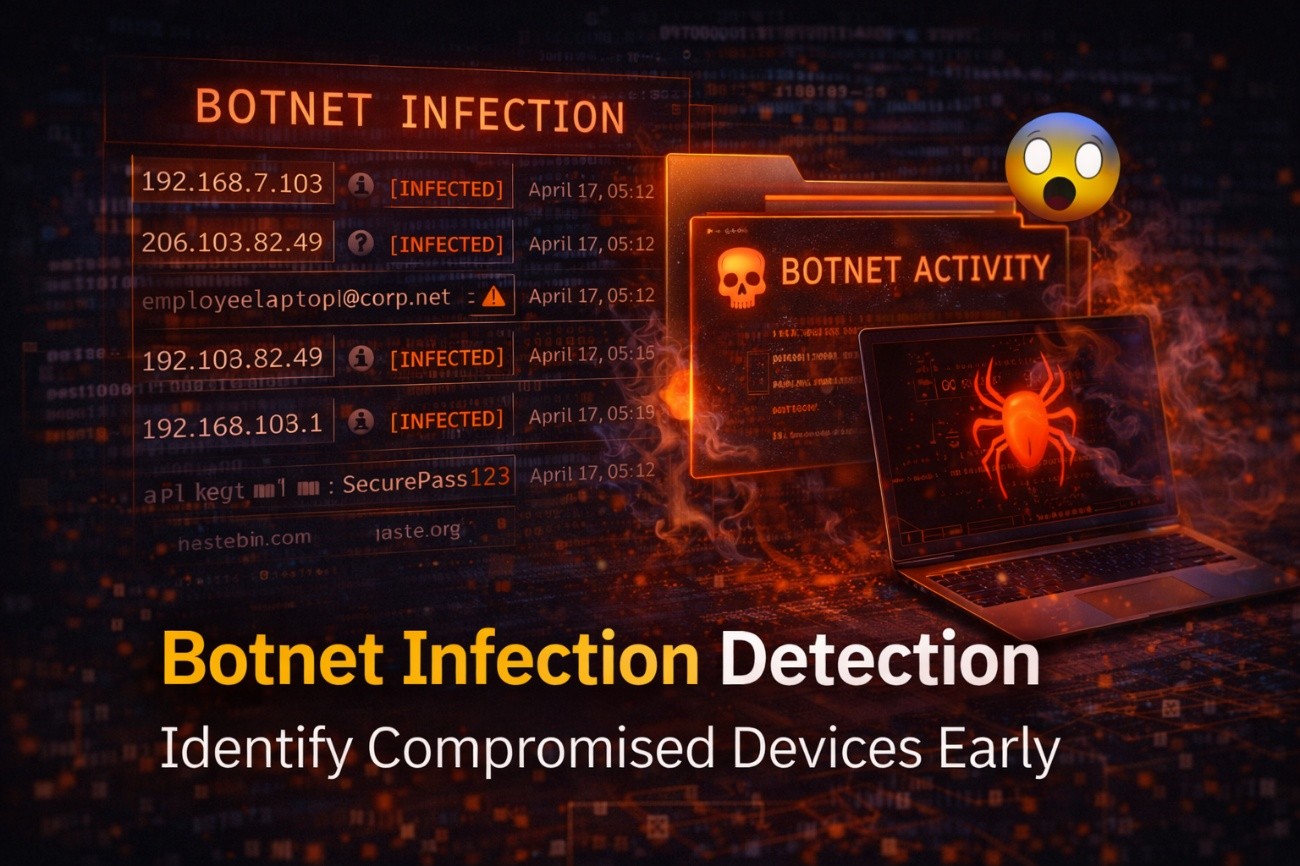
What Is a Botnet Infection
A botnet infection occurs when malware compromises a device and connects it to a command-and-control infrastructure controlled by cybercriminals. Once infected, the device becomes a bot or zombie that executes instructions sent by the botnet operator without the owner's knowledge.
Botnets can infect a wide range of systems, including employee laptops, servers, cloud workloads, IoT devices, routers, and even industrial systems. Infection vectors often include phishing emails, malicious attachments, drive-by downloads, cracked software, exposed services, or vulnerabilities in outdated systems.
Unlike traditional malware that immediately causes visible disruption, botnets are designed for long-term exploitation. This makes botnet infection detection significantly more challenging than detecting standard malware incidents.
Why Botnet Infections Are So Dangerous
Botnet infections pose a unique risk because they transform legitimate infrastructure into an attack platform. Organizations may unknowingly participate in cybercrime while exposing themselves to legal, financial, and reputational damage.
Common botnet-driven activities include distributed denial-of-service attacks, credential stuffing campaigns, data exfiltration, spam distribution, cryptomining, and lateral movement inside corporate networks. In some cases, botnets act as the first stage of larger attacks, later deploying ransomware or stealer malware.
The real danger lies in the silent nature of these infections. Without dedicated botnet infection detection, many organizations only discover the issue after external abuse reports, service disruptions, or law enforcement inquiries.
How Attackers Build and Operate Botnets
Understanding how botnets operate is key to effective botnet infection detection. Most botnets rely on a centralized or semi-distributed command-and-control architecture. Infected devices periodically check in with control servers or peer-to-peer nodes to receive instructions.
Attackers often update botnet payloads dynamically, allowing them to change behavior, add new modules, or evade detection. Some botnets rotate domains and IP addresses frequently, making traditional blacklist-based defenses ineffective.
Modern botnets also leverage encrypted communication channels and legitimate cloud services to blend in with normal traffic. This evolution has made network-based detection alone insufficient, reinforcing the need for intelligence-driven detection strategies.
Signs That Indicate a Botnet Infection
While botnet infections are designed to be stealthy, there are still indicators that can reveal compromised devices. These indicators may appear internally or externally, often before the organization realizes there is a problem.
Common signs include unexplained outbound connections to suspicious infrastructure, unusual traffic patterns, abnormal authentication attempts, and connections to known botnet-related domains. In some cases, infected devices may appear in leaked botnet logs shared in underground forums or sold on dark web marketplaces.
Botnet infection detection solutions focus on correlating these weak signals across multiple sources, turning fragmented indicators into actionable intelligence.
The Role of Dark Web Intelligence in Botnet Detection
One of the most effective ways to detect botnet infections is by monitoring cybercriminal ecosystems where botnet data is traded, leaked, or discussed. Attackers frequently sell access to infected machines, publish botnet logs, or advertise active botnet campaigns on underground platforms.
By monitoring dark web forums, Telegram channels, paste sites, and illicit marketplaces, organizations can identify signs that their assets are part of a botnet long before an incident escalates. This external visibility is critical, as many botnet infections do not trigger internal security alerts.
Dark web intelligence complements endpoint and network security by providing attacker-side visibility rather than relying solely on defensive telemetry.
What Botnet Infection Detection Monitors
Effective botnet infection detection goes beyond simple malware scanning. It focuses on identifying evidence that an organization's assets are actively being exploited or controlled by external actors.
This includes monitoring for leaked botnet logs, command-and-control infrastructure references, compromised IP addresses, stolen credentials associated with botnet activity, and mentions of specific organizations or assets in underground discussions. It also involves tracking botnet families, infection campaigns, and infrastructure reuse patterns.
By correlating these signals, security teams can move from reactive response to proactive remediation.
Botnet Infection Detection for MSSPs and Enterprises
Managed Security Service Providers rely heavily on botnet infection detection to protect multiple clients at scale. Since botnets often affect small subsets of infrastructure across many organizations, MSSPs must identify infections early to prevent widespread abuse.
For enterprises, botnet detection helps reduce attack surface, prevent regulatory exposure, and avoid becoming a launchpad for cyberattacks. In regulated industries, failure to detect and remediate botnet infections can lead to compliance violations and contractual penalties.
Both MSSPs and internal security teams benefit from centralized visibility across clients, assets, and industries, enabling faster response and better prioritization.
How Botnet Infections Lead to Data Breaches
A common misconception is that botnets are only used for DDoS attacks. In reality, many botnet infections serve as entry points for data breaches. Infected devices often act as reconnaissance tools, harvesting credentials, mapping internal networks, and escalating privileges.
Once attackers gain sufficient access, they may extract sensitive data, deploy additional malware, or sell access to other criminal groups. This makes botnet infection detection a critical early-warning system for preventing larger security incidents.
Stopping a botnet infection early can mean the difference between a contained incident and a full-scale breach.
Key Benefits of Continuous Botnet Monitoring
Continuous botnet infection detection provides several strategic advantages. It enables early identification of compromised assets, reduces dwell time, and limits attacker freedom of movement. It also improves incident response by providing context about how and when infections occurred.
Organizations that implement continuous monitoring gain better visibility into emerging threats, allowing them to adapt defenses proactively rather than reacting after damage is done. Over time, this leads to stronger security posture and lower incident costs.
Continuous detection also supports threat hunting, compliance reporting, and executive-level risk assessment.
Botnet Infection Detection vs Traditional Antivirus
Traditional antivirus solutions rely primarily on signature-based detection and known malware patterns. While useful, these tools often fail to detect novel or modified botnet payloads. Attackers continuously change malware signatures to evade detection.
Botnet infection detection, by contrast, focuses on behavior, infrastructure relationships, and external intelligence. Instead of asking whether a file matches a known signature, it asks whether an asset is behaving like part of a botnet.
This shift from static detection to intelligence-driven analysis is essential in today's threat landscape.
Practical Checklist to Reduce Botnet Risk
Organizations can significantly reduce botnet risk by combining detection with basic hygiene. Regular patching, strong credential policies, multi-factor authentication, and network segmentation all reduce the likelihood of infection.
Monitoring outbound traffic, restricting unnecessary services, and educating employees about phishing risks also play an important role. However, even mature organizations benefit from external monitoring, as no defense is perfect.
Botnet infection detection acts as a safety net, catching what preventive controls miss.
Why Early Detection Makes the Biggest Difference
The earlier a botnet infection is detected, the easier it is to remediate. Early detection limits lateral movement, reduces data exposure, and prevents infrastructure abuse. It also minimizes operational disruption and recovery costs.
Organizations that rely solely on internal alerts often discover infections too late. External intelligence-driven detection bridges this gap by revealing attacker activity that internal systems cannot see.
In modern cybersecurity, visibility equals control.
How DarknetSearch Supports Botnet Infection Detection
DarknetSearch provides botnet infection detection by continuously monitoring underground sources where compromised devices and botnet data surface. This includes dark web marketplaces, private forums, paste sites, and real-time messaging channels.
By correlating botnet indicators with domains, IP addresses, credentials, and organizational assets, DarknetSearch enables early identification of infections and actionable alerts. This intelligence allows security teams to respond before attackers escalate their activity.
The platform integrates seamlessly into existing security workflows, supporting both enterprises and MSSPs looking to scale their detection capabilities.
Conclusion: Detect Botnet Infections Before They Turn Into Incidents
Botnet infection detection is no longer optional. As botnets grow more sophisticated and stealthy, organizations must assume that infections can occur despite strong preventive controls. The key is detecting them early and responding decisively.
By combining internal security measures with external intelligence from underground sources, organizations gain a comprehensive view of botnet threats. This approach reduces risk, improves response times, and protects both infrastructure and reputation.
If you want to strengthen your botnet detection strategy and gain visibility into attacker-controlled ecosystems, proactive monitoring is the next logical step.