
Ransomware Leak Monitoring: Detect Data Exposure Before It Spreads
Ransomware leak monitoring has become a critical cybersecurity capability as modern ransomware groups no longer rely solely on encryption. Instead, they exfiltrate sensitive data and threaten public disclosure if the ransom is not paid. This shift has transformed ransomware from an operational disruption into a severe data exposure and reputational risk.
Organizations that fail to detect ransomware leak activity early often learn about an incident only after their name appears on a dark web leak site. By then, customer data, internal documents, credentials, and intellectual property may already be circulating among cybercriminals. Effective ransomware leak monitoring allows companies to identify exposure early, validate the threat, and respond before irreversible damage occurs.
This page explains how ransomware leak monitoring works, why it matters, and how DarknetSearch helps organizations detect and respond to ransomware-related data leaks in real time.
What Is Ransomware Leak Monitoring?
Ransomware leak monitoring is the continuous tracking of dark web sources where ransomware groups publish stolen data. These sources include dedicated leak sites, private forums, encrypted chat channels, and underground marketplaces.
Unlike traditional ransomware detection tools that focus on endpoint behavior, ransomware leak monitoring operates externally. It answers a crucial question: Has my organization's data already been stolen and published, or is it about to be exposed?
Monitoring focuses on identifying mentions of company names, domains, email addresses, internal filenames, and database references associated with ransomware operations. When detected early, organizations can assess scope, initiate incident response, and coordinate legal and regulatory actions proactively.
Why Ransomware Groups Leak Data
Modern ransomware groups operate under a double or triple extortion model. Encryption alone is no longer sufficient leverage. Attackers now combine multiple pressure tactics to force payment.
The primary motivations for leaking data include increasing ransom pressure, damaging brand reputation, exposing regulatory violations, and enabling secondary monetization of stolen data. Once data is published, it may be resold, reused in fraud campaigns, or exploited in credential-based attacks.
Ransomware leak monitoring helps organizations understand whether a threat actor is bluffing or already in possession of sensitive data. This distinction is critical when making high-stakes decisions during an incident.
Common Ransomware Leak Sources
Ransomware groups operate structured infrastructures specifically designed for data disclosure. These leak ecosystems evolve constantly, making manual tracking ineffective.
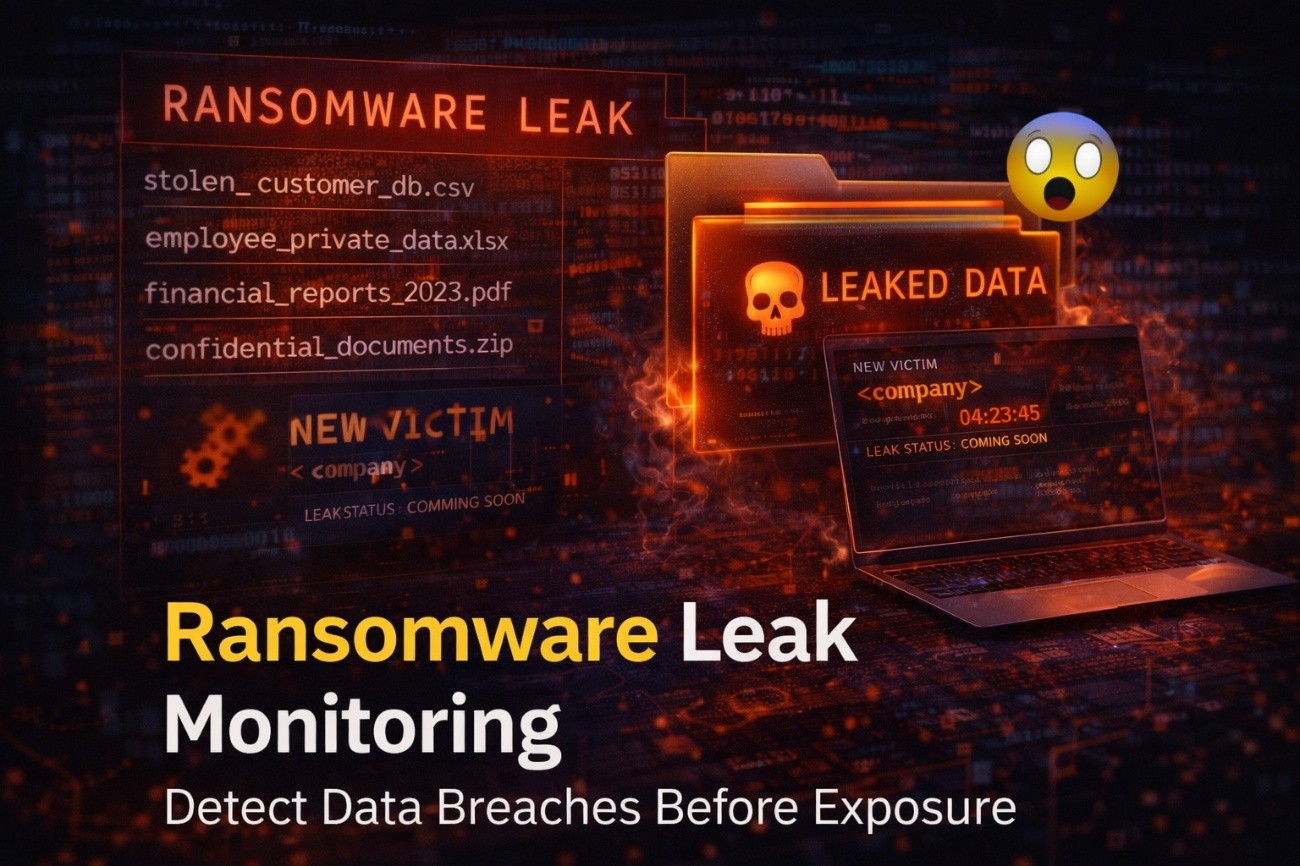
Typical sources include ransomware group leak portals hosted on Tor, encrypted messaging channels announcing new victims, underground forums where sample files are shared, and paste sites used for teaser leaks. Some groups also release countdown timers to increase pressure and signal imminent publication.
DarknetSearch continuously monitors these environments to detect early indicators of data exposure across multiple ransomware families without relying on static lists or manual research.
Victim announcements on leak sites are an early warning. They are covered in dark web & forum monitoring, next to forum threads, Telegram channels and paste sites. The leaked files themselves are searchable in data breach detection.
What Types of Data Are Exposed in Ransomware Leaks?
Ransomware leaks often contain far more than basic files. The scope of exposed data can be extensive and deeply damaging.
Common leaked assets include customer databases, employee records, financial documents, internal emails, authentication credentials, source code, and legal or medical records. In many cases, attackers selectively leak the most sensitive files to maximize leverage and media attention.
Ransomware leak monitoring enables organizations to identify exactly what data types are involved, helping teams prioritize response actions and understand downstream risk.
How Ransomware Leak Monitoring Works
Effective ransomware leak monitoring requires automated collection, correlation, and analysis of threat intelligence across multiple hidden sources.
DarknetSearch continuously scans ransomware leak sites, underground forums, and encrypted communication channels for indicators linked to monitored organizations. Detection is not limited to exact company names but includes contextual references, internal domains, file paths, and metadata.
When a potential match is identified, analysts and automated systems validate the signal to reduce false positives. Alerts are then enriched with contextual information, including ransomware group attribution, leak status, and data categories involved.
Early Detection vs Public Disclosure
One of the most important advantages of ransomware leak monitoring is timing. Detecting a leak before public disclosure can significantly change the outcome of an incident.
Early detection allows organizations to engage incident response teams, legal counsel, insurers, and regulators before public exposure. It also enables coordinated communications with customers and partners, reducing reputational damage and regulatory penalties.
Once data is publicly released, control is effectively lost. Ransomware leak monitoring shifts organizations from reactive to proactive defense.
Who Needs Ransomware Leak Monitoring?
Ransomware leak monitoring is essential for any organization that handles sensitive data or operates in regulated industries.
Enterprises, healthcare providers, financial institutions, technology companies, and government entities are frequent ransomware targets. MSSPs also rely on ransomware leak monitoring to provide value-added threat intelligence services to their clients.
Even organizations without confirmed ransomware incidents benefit from monitoring, as it can reveal silent compromises or historical exposures that were never detected internally.
Ransomware Leak Monitoring for MSSPs
With DarknetSearch, MSSPs can monitor multiple clients simultaneously, generate white-labeled reports, and deliver early warnings when a client appears on a ransomware leak site. This capability strengthens client trust and creates high-value recurring services.
Multi-tenant monitoring and automated alerts allow MSSPs to scale ransomware intelligence without increasing analyst workload.
What Happens After Detection?
Detection is only the first step. Once ransomware leak activity is identified, organizations must act quickly and decisively.
Recommended actions include validating the authenticity of the leak, determining data scope, isolating affected systems, rotating credentials, and engaging legal and regulatory stakeholders. Communication strategies must be carefully planned to avoid misinformation or panic.
DarknetSearch provides actionable intelligence rather than raw alerts, helping organizations move from detection to remediation efficiently.
Practical Checklist: Responding to a Ransomware Leak
A clear response plan reduces chaos during an incident. Key steps include:
- Identify the ransomware group and leak source
- Determine whether data has been published or is pending
- Assess exposed data types and affected individuals
- Engage legal, compliance, and PR teams early
- Notify regulators if required
- Monitor ongoing leak activity and secondary exposure
Ransomware Leak Monitoring vs Traditional Ransomware Detection
Traditional ransomware tools focus on detecting malicious activity inside the network. While essential, they do not provide visibility into external data exposure.
Ransomware leak monitoring complements endpoint detection by revealing what attackers do after exfiltration. Many organizations discover leaks despite never seeing ransomware encryption internally.
This external perspective is critical in today's threat landscape, where stealthy exfiltration often precedes public extortion.
Why DarknetSearch for Ransomware Leak Monitoring
DarknetSearch combines automated scanning, contextual intelligence, and human validation to deliver reliable ransomware leak monitoring at scale.
Unlike basic keyword monitoring, DarknetSearch correlates multiple indicators to reduce false positives and provide meaningful alerts. The platform integrates ransomware intelligence into a broader dark web monitoring strategy, enabling organizations to see the full picture.
Internal linking with credential leak detection and stealer log monitoring further strengthens exposure analysis across the threat lifecycle.
Learn more about our capabilities at https://darknetsearch.com/ and explore how ransomware intelligence fits into a complete cyber threat monitoring strategy.
For additional context on ransomware trends, the MITRE ATT&CK framework provides authoritative insight into ransomware tactics and extortion models.
Conclusion: Stay Ahead of Ransomware Extortion
Ransomware leak monitoring is no longer optional. As ransomware groups evolve into data extortion enterprises, organizations must monitor where stolen data is exposed, not just how systems are attacked.
By detecting leaks early, validating exposure, and responding proactively, organizations can reduce financial impact, protect reputation, and meet regulatory obligations. Ransomware leak monitoring transforms uncertainty into actionable intelligence.