
Stealer Log Monitoring: Detect Compromised Devices Before Credentials Are Exploited
Stealer log monitoring has become a critical capability for modern cybersecurity teams as malware-based data theft continues to rise. Unlike traditional data breaches that originate from compromised servers, stealer logs expose sensitive information directly from infected user devices. This makes them one of the fastest and most dangerous sources of credential compromise today.
Cybercriminals use information-stealing malware to silently harvest usernames, passwords, session cookies, browser data, crypto wallets, and autofill information from infected machines. These logs are then sold or shared across dark web forums, Telegram channels, and underground marketplaces, often within hours of infection. Without stealer log monitoring, organizations remain blind to these compromises until accounts are abused, systems are accessed, or fraud occurs.
We explain what stealer logs are, why they are so dangerous, how stealer log monitoring works, and how organizations can use it to detect compromised credentials and infected devices before attackers act.
What Are Stealer Logs?
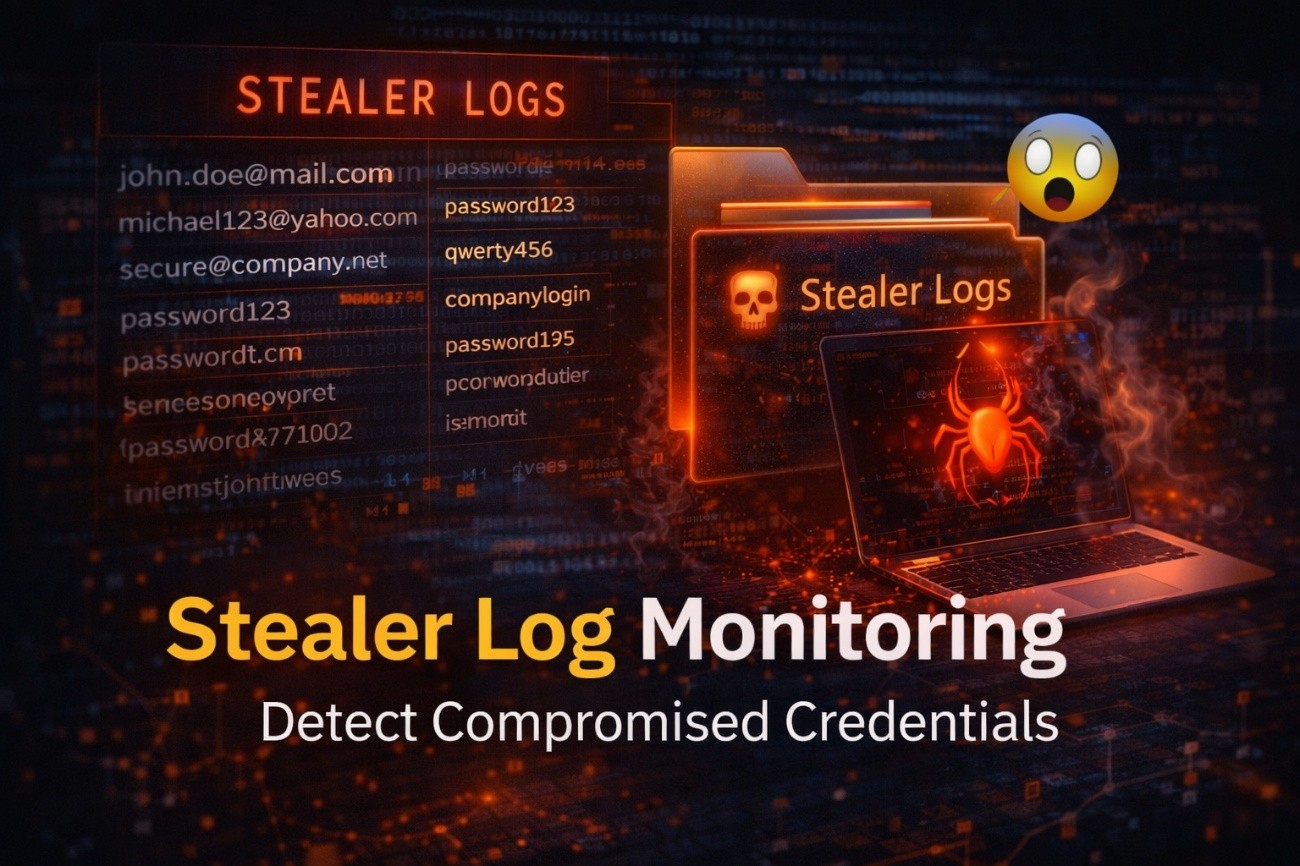
Stealer logs are data dumps generated by information-stealing malware installed on a victim's device. These malware families infect endpoints through phishing emails, malicious downloads, cracked software, fake browser extensions, or trojanized installers. Once executed, the malware extracts valuable information and sends it to the attacker's infrastructure.
A typical stealer log may include saved browser passwords, cookies and active sessions, email accounts, VPN credentials, FTP and RDP access, cloud service logins, internal portals, crypto wallet data, and system metadata such as IP address, operating system, and installed software. Because this data comes directly from the endpoint, it often bypasses server-side security controls.
Stealer logs are commonly associated with malware families such as RedLine, Raccoon, Vidar, Lumma, Meta, and Aurora. These logs are rarely used only once. They are resold, repackaged, and redistributed, meaning a single infection can expose an organization repeatedly over time.
Why Stealer Logs Are More Dangerous Than Traditional Breaches
Traditional data breaches usually involve a compromised database or system, often detected weeks or months later. Stealer logs, by contrast, represent live, fresh access harvested directly from users. This makes them extremely valuable to attackers.
Because stealer logs often include session cookies, attackers can bypass multi-factor authentication entirely. Even organizations with strong password policies and MFA may still be vulnerable if session tokens are stolen. In many cases, attackers use stealer logs to access email accounts, reset passwords, escalate privileges, and move laterally across corporate environments.
Another key risk is that stealer logs expose unmanaged endpoints. Employees working remotely or using personal devices may become infected outside corporate networks. Without visibility into stealer log exposure, security teams have no way to detect these compromised endpoints.
Stealer logs are also a major driver behind ransomware attacks, business email compromise, and account takeover campaigns. Many high-impact attacks begin with credentials sourced from stealer malware rather than traditional hacking techniques.
What Is Stealer Log Monitoring?
Stealer log monitoring is the continuous process of tracking underground sources for evidence that an organization's credentials, domains, users, or systems appear in stealer malware data.
Instead of waiting for alerts from endpoint protection or SIEM tools, stealer log monitoring proactively searches dark web forums, Telegram channels, private leak repositories, paste sites, and criminal marketplaces where stealer logs are distributed.
The goal is early detection. When an organization identifies that a user or domain appears in stealer logs, it can take immediate action to contain the threat before attackers exploit the access.
Effective stealer log monitoring focuses on relevance and context. Not all logs are equal. The most valuable detections include recent logs, verified malware sources, clear attribution to infected devices, and evidence of access to corporate systems.
How Stealer Log Monitoring Works
Stealer log monitoring platforms collect and analyze large volumes of underground data from multiple sources. These sources include public and private Telegram channels, dark web marketplaces, forums, file hosting services, and stealer malware distribution hubs.
The monitoring process typically begins by mapping an organization's digital footprint. This includes corporate domains, subdomains, email formats, VPN endpoints, cloud services, and internal portals. The platform then scans stealer logs for matches against this footprint.
Advanced platforms enrich detections with context such as infection date, malware family, geolocation, IP address, device type, and affected services. This allows security teams to prioritize remediation based on risk rather than raw volume.
Stealer log monitoring is not a one-time scan. New logs are generated daily, and previously infected machines may continue to leak data. Continuous monitoring ensures that organizations remain aware of ongoing exposure.
What Data Can Stealer Log Monitoring Detect?
Stealer log monitoring can reveal a wide range of sensitive information. Common findings include corporate email credentials, VPN and remote access credentials, cloud service logins, CRM and ERP access, internal dashboards, and administrative panels.
In addition to usernames and passwords, stealer logs often contain browser cookies and authentication tokens. These allow attackers to hijack active sessions without knowing the password. This is particularly dangerous for services that rely heavily on persistent sessions.
Stealer logs may also expose credentials for third-party tools used by employees, such as Git repositories, cloud storage platforms, ticketing systems, and collaboration tools. These secondary exposures are often overlooked but can lead to supply chain attacks.
Who Needs Stealer Log Monitoring?
Any organization with employees, customers, or partners accessing digital systems can benefit from stealer log monitoring. It is particularly critical for companies operating in regulated industries, handling sensitive data, or relying on remote access.
Managed Security Service Providers use stealer log monitoring to protect multiple clients simultaneously. By detecting infections across client environments, MSSPs can deliver proactive alerts, remediation guidance, and continuous monitoring as part of their service offering.
Enterprises with large remote workforces face elevated risk, as personal devices and unmanaged endpoints are common infection vectors. Stealer log monitoring provides visibility into threats that traditional endpoint tools may miss.
Small and medium-sized businesses are also frequent targets. Cybercriminals often view SMBs as easier entry points, especially when credentials are reused across systems.
Stealer Log Monitoring vs Credential Leak Detection
While credential leak detection focuses on breached databases and exposed datasets, stealer log monitoring addresses a different threat vector. Credential leaks usually originate from hacked services. Stealer logs originate from infected endpoints.
Both are essential, but stealer logs often provide earlier warning. In many cases, credentials appear in stealer logs before they ever surface in large breach dumps. This makes stealer log monitoring a powerful early indicator of compromise.
Organizations that rely only on breach monitoring may miss active infections. Stealer log monitoring fills this gap by detecting exposure at the endpoint level.
How Organizations Should Respond to Stealer Log Exposure
When stealer log monitoring identifies exposed credentials, immediate action is required. Affected accounts should be disabled or have passwords reset, sessions invalidated, and MFA re-enrolled if necessary.
Security teams should also investigate the infected endpoint. This may involve isolating the device, running malware scans, reimaging the system, or revoking access entirely. Simply changing passwords without addressing the infection can lead to repeated compromise.
Organizations should review access logs to identify suspicious activity and assess whether lateral movement has occurred. In high-risk cases, incident response procedures may be required.
Communication is also critical. Affected users should be informed and trained to recognize phishing and malware delivery techniques to reduce future infections.
The Role of Stealer Log Monitoring in a CTI Strategy
Stealer log monitoring is a key component of cyber threat intelligence. It provides insight into attacker behavior, active malware campaigns, and emerging threat trends.
By analyzing stealer log data over time, organizations can identify which services are most frequently targeted, which regions show higher infection rates, and which malware families are most active. This intelligence can inform security controls, user training, and investment decisions.
For MSSPs, stealer log monitoring enables value-added reporting. Clients gain visibility into real-world threats affecting their environment, not just theoretical risks.
Common Challenges and Limitations
Not all stealer logs are equal in quality. Some datasets contain outdated or recycled data. Effective monitoring requires filtering, validation, and prioritization to avoid noise.
Privacy and compliance considerations must also be addressed. Monitoring should focus on organizational exposure rather than unnecessary collection of personal data. Reputable platforms implement strict data handling and access controls.
Finally, stealer log monitoring is most effective when integrated into broader security workflows. Alerts without response processes provide limited value.
Why Continuous Monitoring Matters
Stealer malware operations are industrialized. New logs are generated constantly, and old infections may resurface. A single scan provides only a snapshot in time.
Continuous stealer log monitoring ensures ongoing visibility and reduces dwell time. The faster an organization detects exposure, the lower the likelihood of account takeover, fraud, or ransomware deployment.
Conclusion: Turn Stealer Logs Into Early Warning Signals
Stealer log monitoring transforms one of the most dangerous underground data sources into actionable intelligence. By detecting compromised devices and credentials early, organizations can interrupt attack chains before damage occurs.
In a threat landscape where endpoint infections drive many major breaches, relying solely on traditional security tools is no longer enough. Stealer log monitoring provides the missing visibility needed to protect users, systems, and data.
Organizations that integrate stealer log monitoring into their cybersecurity strategy gain a decisive advantage: awareness before exploitation.