
ShinyHunters Breach Revealed: 7 Key Impacts of the Alleged Resecurity Hack

➤Summary
ShinyHunters breach allegations have once again pushed cybercrime groups into the spotlight, this time involving the cybersecurity firm Resecurity. According to multiple reports, the notorious threat actor ShinyHunters claimed to have accessed sensitive Resecurity systems, allegedly stealing employee data, internal communications, threat intelligence reports, and client information. Resecurity, however, strongly disputes the claim, stating that the attackers interacted with a controlled environment designed as a honeypot.
This unfolding story has become a critical reference point for organizations tracking underground threats, exposing how blurred the line can be between a genuine intrusion and a deliberate trap 🛡️. Understanding what really happened is essential for security teams, threat intelligence analysts and CISOs navigating today’s volatile threat landscape.
Who Are ShinyHunters and Why They Matter
ShinyHunters is a well-known cybercriminal collective linked to numerous high-profile leaks and extortion campaigns. Their reputation has been built on posting stolen databases, credentials, and proprietary information on underground forums. Because of this history, any ShinyHunters breach claim is immediately taken seriously by the cybersecurity community. Analysts monitoring criminal forums often view their announcements as early indicators of wider compromise trends. Their operations highlight how threat actors use publicity, fear, and reputational pressure as weapons ⚠️. Even when claims are disputed, the market reaction and media attention can be damaging for the targeted organization.

Allegations Against Resecurity Explained
In this incident, ShinyHunters alleged that they breached Resecurity and exfiltrated sensitive corporate and client-related materials. These claims quickly circulated across cybercrime forums and news outlets, amplified by screenshots and statements intended to validate the intrusion. The group asserted access to internal emails, employee records, and intelligence reports, suggesting a deep compromise. From an external perspective, the narrative fit the pattern seen in previous ShinyHunters operations. Yet, the context around the ShinyHunters breach narrative soon became more complex as Resecurity responded publicly.
Resecurity’s Honeypot Defense
Resecurity countered the allegations by stating that no production systems were breached. According to the company, the attackers accessed a honeypot environment specifically designed to attract and observe malicious activity. Honeypots are decoy systems designed to collect intelligence on attackers’ tools, methods, and intent. In this case, the setup featured synthetic employee accounts, dummy applications, and an isolated infrastructure completely detached from real operations or customer data. One such decoy was strategically deployed through a dark web marketplace using a bait account. To substantiate this, the company provided Hackread.com with logs of the attackers’ activity and screenshots showing repeated attempts to access fake accounts such as “mark.”
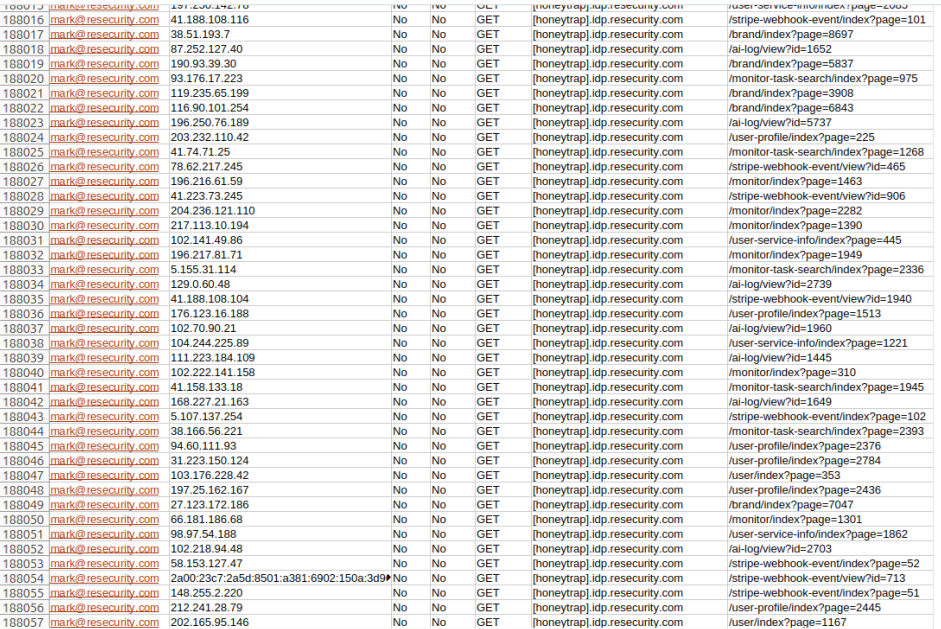
If accurate, this would mean the ShinyHunters breach claim was effectively a misinterpretation of a trap. Such tactics are increasingly common among advanced security firms seeking proactive threat intelligence. The case underscores how attackers themselves can be misled, turning an apparent win into a data point for defenders 🧠.
What Makes This Case Unique
Is this a real breach or a controlled experiment gone public? The answer, based on available evidence, leans toward Resecurity’s explanation, though independent verification remains limited. This raises an important question: can threat actors reliably tell when they are inside a honeypot? The clear answer is no—modern deception technologies are sophisticated enough to mimic real environments convincingly. This uncertainty complicates how the cybersecurity community interprets public breach claims and highlights why contextual analysis is critical 🔍.
Impact on Trust, Clients, and the Industry
Regardless of the technical reality, the ShinyHunters breach narrative created reputational pressure. Clients naturally worry when a security vendor is named in alleged leaks, even if later disproven. Trust is fragile in cybersecurity, and perception can be as damaging as fact. This incident demonstrates how attackers exploit that dynamic. For the industry, it reinforces the need for transparency, rapid communication, and evidence-based responses. Companies that can clearly explain events and controls are better positioned to maintain credibility.
Dark Web Claims and Intelligence Verification
Underground forums remain a primary channel for threat actors to publish claims. Analysts must validate these assertions by cross-referencing data samples, timelines, and technical indicators. Platforms like darknetsearch.com provide valuable context for tracking such discussions and identifying patterns across campaigns. In many cases, alleged leaks turn out to be recycled data or partial access rather than full compromise. The ShinyHunters breach discussion illustrates how misinformation can spread rapidly if not carefully analyzed 📊.
Practical Checklist for Organizations
Here is a concise checklist organizations can use when facing public breach allegations:
- Verify claims through internal logs and third-party intelligence.
- Assess whether exposed assets could be decoys or test environments.
- Monitor underground forums using trusted sources like https://darknetsearch.com/ for ongoing chatter.
- Prepare a clear, factual public response quickly.
- Document lessons learned to improve incident response maturity.
This approach helps transform uncertainty into structured decision-making.
Lessons for Threat Monitoring Programs
One major takeaway from the ShinyHunters breach story is the importance of proactive visibility. Organizations that compare dark web monitoring capabilities often discover gaps in how quickly they can validate claims. A mature dark web monitoring solution enables teams to detect, analyze, and contextualize threat actor statements before they escalate. This case also serves as a real-world case study dark web monitoring teams can use to refine playbooks and escalation paths. Continuous intelligence gathering is no longer optional—it is foundational to modern cyber defense 🚀.
The Role of Reporting and Detection
Accurate reporting plays a crucial role in separating fact from fiction. A structured dark web monitoring report helps executives understand exposure levels without panic. Combined with robust data breach detection processes, organizations can quickly determine whether claims are credible. In this incident, Resecurity’s ability to explain the honeypot context reduced uncertainty, though public debate remains. As one security analyst noted, “Deception environments are now so realistic that attackers often don’t realize they’re being studied.” This evolving dynamic changes how both sides operate.
Industry-Wide Implications
The broader implication of the ShinyHunters breach narrative is clear: cyber conflict now includes psychological and reputational dimensions. Attackers seek attention, while defenders must balance disclosure with operational security. For CISOs and boards, this means investing not just in tools, but in communication strategies and intelligence partnerships. Leveraging Dark Web Monitoring platforms ensures balanced cybersecurity situational awareness 🌐.
Conclusion: Turning Controversy into Capability
The alleged ShinyHunters breach of Resecurity may ultimately be remembered less for data loss and more for what it reveals about modern cyber operations. Whether a genuine intrusion or a successful honeypot, the incident highlights the need for verification, transparency, and continuous monitoring. Organizations that treat such events as learning opportunities strengthen their resilience and response readiness. Stay informed, stay prepared, and turn intelligence into action.
Discover much more in our complete guide
Request a demo NOW
Discover how CISOs, SOC teams, and risk leaders use our platform to detect leaks, monitor the dark web, and prevent account takeover.
🚀Explore use cases →