Covenant Health Data Breach Revealed: 7 Key Facts on the 478,000-Patient Impact
➤Summary
Covenant Health data breach incidents have become a defining example of how vulnerable healthcare organizations remain in the face of sophisticated cybercrime. The Covenant Health data breach first came to public attention after investigators confirmed that nearly 478,000 individuals were affected by a ransomware operation attributed to the QILIN Ransomware Group. This healthcare data breach highlights the growing risks facing hospitals, patients, and partners as threat actors increasingly target sensitive medical information.
In this article, we explore what happened, what data was compromised, why this incident matters for the wider healthcare sector, and how organizations can strengthen their defenses against similar attacks. 🛑
What Happened in the Covenant Health Cyber Incident
The Covenant Health data breach originated from a ransomware attack that disrupted internal systems and exposed sensitive patient data. According to public disclosures, the QILIN Ransomware Group gained unauthorized access to Covenant Health’s network, exfiltrated data, and later pressured the organization through extortion tactics. This healthcare data breach detection was not an isolated technical failure but part of a broader trend where cybercriminal groups exploit outdated systems, limited visibility, and high-pressure environments within healthcare institutions. The QILIN ransomware attack on Covenant Health demonstrates how attackers increasingly focus on data theft rather than mere encryption, amplifying the long-term consequences for victims. 🔐

Scope and Scale of the Data Compromise
The Covenant Health data breach impacted approximately 478,000 individuals, making it one of the more significant healthcare data breach events disclosed in recent years.
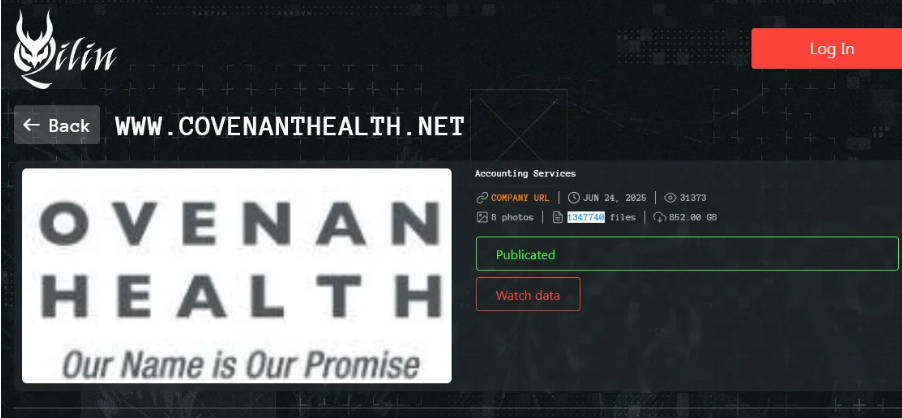
The compromised information reportedly included names, addresses, dates of birth, medical record numbers, Social Security numbers, health insurance information, and detailed treatment data such as diagnoses, dates of treatment, and types of care received. This breadth of exposed data increases the risk of identity theft, insurance fraud, and long-term privacy violations. In a healthcare data breach of this magnitude, the fallout extends far beyond immediate operational disruption and into patients’ personal and financial lives. 📊
Why Healthcare Data Is a Prime Target
Healthcare data breaches like the Covenant Health data breach are particularly damaging because medical data has a high resale value on underground markets. Unlike passwords, medical histories and Social Security numbers cannot be easily changed. Attackers know that hospitals often prioritize patient care over cybersecurity investments, creating opportunities for intrusion. The QILIN ransomware attack on Covenant Health fits a broader pattern of ransomware groups exploiting this imbalance. Analysts who compare dark web monitoring insights across industries consistently note that healthcare records command premium prices due to their depth and permanence. 🧠
The Role of the QILIN Ransomware Group
The QILIN Ransomware Group is known for double-extortion tactics, combining system encryption with data exfiltration. In the Covenant Health data breach, QILIN allegedly leveraged stolen data to pressure the organization into compliance. This healthcare data breach underscores how modern ransomware groups operate more like organized businesses than opportunistic hackers. According to cybersecurity experts, QILIN’s methods align with a growing ecosystem where affiliates, brokers, and leak sites work together to monetize stolen information. As one analyst noted, “Ransomware is no longer just about locking files—it’s about controlling data.” 💬
Regulatory and Legal Implications
A Covenant Health data breach of this size triggers extensive regulatory scrutiny and potential legal exposure. Healthcare organizations in the United States must comply with HIPAA and state-level data protection laws, all of which mandate timely notification and reasonable safeguards. When a healthcare data breach involves Social Security numbers and medical details, class-action lawsuits and regulatory fines often follow. The long-term cost of such incidents frequently exceeds the immediate ransom or remediation expenses, reinforcing the need for proactive security strategies and continuous data breach detection. ⚖️
Lessons for Healthcare Organizations
What can other providers learn from the Covenant Health data breach? First, visibility is critical. Organizations that lack insight into their digital footprint often discover breaches too late. Second, incident response planning must assume data exfiltration, not just system downtime. Third, continuous monitoring of underground forums and leak sites is essential. Many security teams now rely on a to identify early signs of exposure before attackers make data public. These lessons are not theoretical; they are repeatedly validated by real-world healthcare data breach cases. 🛡️
Practical Checklist to Reduce Breach Risk
Here is a practical checklist healthcare organizations can apply today:
- Conduct regular risk assessments focused on patient data repositories
- Patch and segment critical systems to limit lateral movement
- Train staff on phishing and social engineering awareness
- Implement multi-factor authentication across all access points
- Use a dark web monitoring report to identify leaked credentials early
- Test incident response plans with realistic ransomware scenarios
This checklist reflects best practices observed in each major healthcare data breach investigation. ✅
Monitoring the Dark Web for Early Warning
Can dark web intelligence really make a difference? Yes, when implemented correctly. By tracking chatter, stolen credentials, and leak site activity, organizations can gain valuable lead time. A case study dark web monitoring approach shows that early alerts often reduce the impact of a breach by enabling faster containment and communication. Darknetsearch platform provides valuable insights into how underground ecosystems operate and how defenders can stay informed. Early data breach detection remains one of the most effective ways to limit damage. 🔍
Industry-Wide Impact and Patient Trust
The Covenant Health data breach also raises questions about patient trust. When a healthcare data breach occurs, patients may hesitate to share sensitive information, potentially affecting care outcomes. Trust, once lost, is difficult to rebuild. Transparency, timely notification, and tangible improvements to security posture are essential steps in restoring confidence. Many organizations now integrate insights from darknetsearch.com into their broader risk management programs to demonstrate commitment to patient privacy. 🤝
External Analysis and Expert Reporting
Independent reporting has played a key role in understanding the Covenant Health data breach. According to a detailed analysis published by SecurityWeek, the incident underscores how ransomware groups continue to evolve their tactics and target critical infrastructure . Such expert coverage helps healthcare leaders contextualize their own risk and benchmark defenses against real-world threats. Ongoing research and intelligence sharing remain vital as attackers adapt. 📰
Internal Resources and Ongoing Education
Healthcare leaders seeking deeper insights can explore additional intelligence and threat research through platforms like https://darknetsearch.com/, which regularly analyzes ransomware trends, leak sites, and emerging threats. By integrating these insights into training and governance, organizations can move from reactive to proactive defense. Education, combined with technology, remains a cornerstone of resilience against the next Covenant Health data breach–scale event. 📚
Conclusion: Turning Breach Lessons into Action
The Covenant Health data breach is a stark reminder that no healthcare organization is immune to cyber threats. From the QILIN ransomware attack on Covenant Health to the exposure of hundreds of thousands of patient records, this healthcare data breach illustrates the high stakes involved. Yet it also offers clear lessons: invest in visibility, prioritize data breach detection, and monitor the dark web continuously. By applying these insights, healthcare providers can reduce risk, protect patients, and strengthen trust. Discover much more in our complete guide and take the next step toward resilience. Request a demo NOW 🚀
Discover how CISOs, SOC teams, and risk leaders use our platform to detect leaks, monitor the dark web, and prevent account takeover.
🚀Explore use cases →