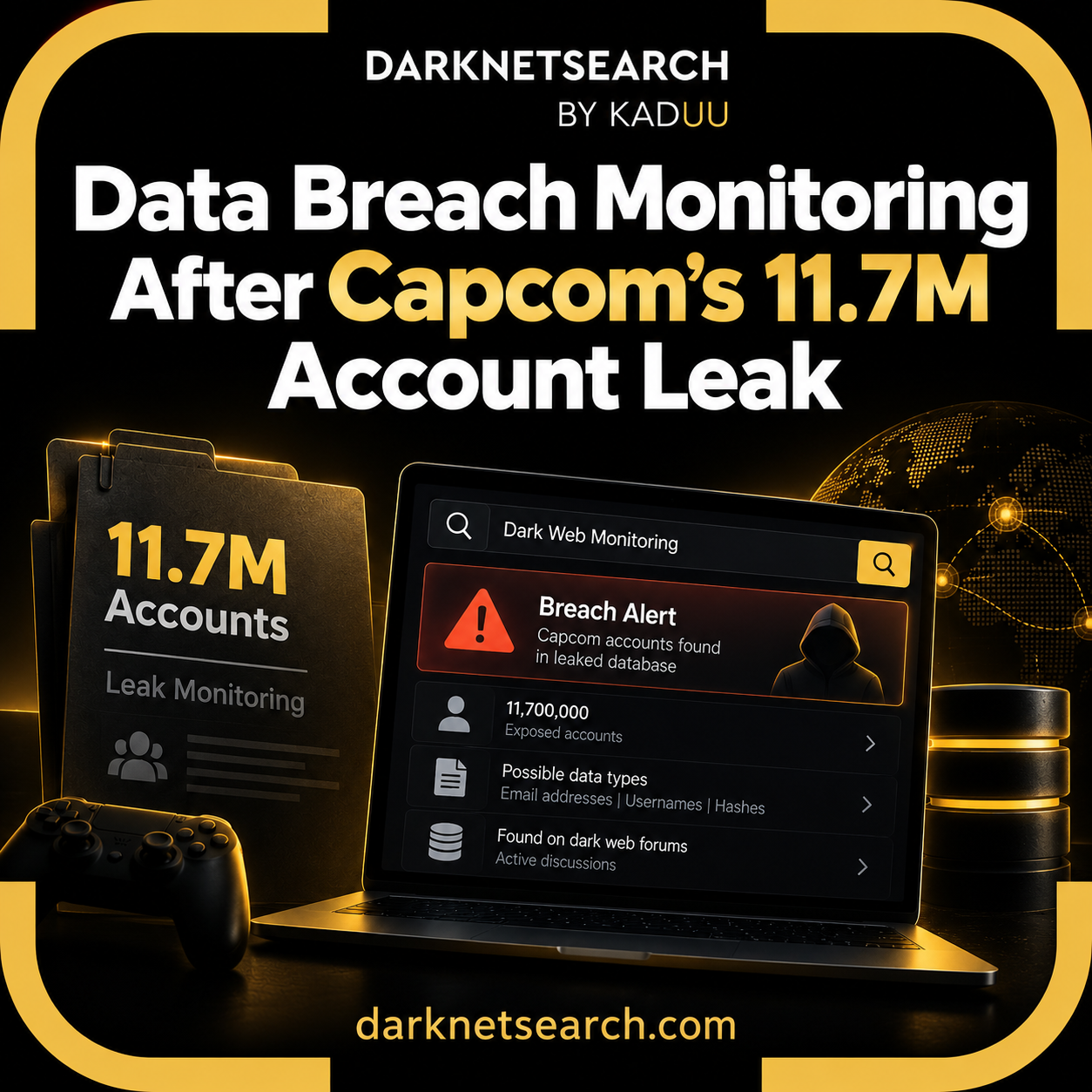
PHP2Shell: Critical PHP Vulnerabilities Expose Web Servers to Remote Code Execution
➤Summary
October 22, 2026 | Cybersecurity News | Vulnerability Management
Two critical PHP vulnerabilities disclosed on October 21, 2026, are raising urgent concerns across the cybersecurity community. Known collectively as PHP2Shell, the flaws could allow unauthenticated attackers to execute code on affected servers. As exploitation attempts emerge, identifying potentially vulnerable internet-facing assets has become a priority for security teams.
What Is PHP2Shell?
On October 21, 2026, the PHP security team released emergency updates addressing two critical vulnerabilities in the PHP runtime.

Identified as CVE-2026-109618 and CVE-2026-109619, the vulnerabilities have been collectively named PHP2Shell because successful exploitation can lead to remote code execution (RCE).
Both vulnerabilities received a CVSS v4.0 score of 9.2, indicating critical severity.
Unlike many web application vulnerabilities that originate in insecure application code, PHP2Shell affects the underlying PHP runtime itself.
This distinction is particularly important.
An organization might maintain secure application code, update its plugins, and follow established development practices while remaining exposed because the underlying PHP installation contains vulnerable components.
PHP powers a substantial portion of the modern web, including websites built with WordPress, Drupal, Joomla, and numerous custom business applications.
Consequently, vulnerabilities affecting its core runtime can have implications across industries, from e-commerce and financial services to healthcare and enterprise technology.
For security teams, the immediate challenge is understanding where vulnerable PHP installations exist and determining which systems require urgent remediation.
Understanding CVE-2026-109618 and CVE-2026-109619
Although both vulnerabilities involve memory management weaknesses, they arise through different mechanisms.
CVE-2026-109618: Remote Code Execution Through Memory Corruption
CVE-2026-109618 involves a weakness in PHP’s handling of out-of-memory conditions.
Under certain circumstances, PHP can terminate request processing while internal memory structures remain in an inconsistent state.
Subsequent cleanup operations may then process invalid memory.
Researchers have demonstrated that specially crafted requests can trigger this behavior and potentially achieve remote code execution.
The risk is particularly significant because exploitation has been demonstrated against Apache installations using mod_php, including configurations where malicious input can reach vulnerable code before the application’s own logic executes.
This reduces the effectiveness of application-level protections against the underlying flaw.
CVE-2026-109619: Stale Global State and Use-After-Free
The second vulnerability concerns PHP retaining references to memory that has already been released.
Known as a use-after-free condition, this type of weakness can lead to unexpected application behavior, sensitive memory disclosure, or code execution.
When these conditions are controllable through network requests, they can create serious risks for internet-facing applications.
Both vulnerabilities demonstrate why application security must extend beyond reviewing business logic or identifying insecure libraries.
The security of the runtime environment is equally important.
Which PHP Versions Are Affected?
The emergency PHP releases provide fixes for currently supported branches.
Organizations should ensure their installations use at least the following versions:
| PHP Branch | Fixed Version |
|---|---|
| PHP 8.5 | 8.5.12 |
| PHP 8.4 | 8.4.27 |
| PHP 8.3 | 8.3.36 |
| PHP 8.2 | 8.2.35 |
Earlier versions, including unsupported PHP branches, should be considered potentially vulnerable.
Organizations operating end-of-life PHP versions should plan migration to supported releases rather than assuming older installations will receive security fixes.
However, determining exposure is not always as simple as inspecting a website’s visible technology stack.
PHP may operate behind reverse proxies, content delivery networks, load balancers, containers, or managed hosting environments.
Public version information can also be missing, misleading, or deliberately concealed.
Therefore, discovering a PHP-powered website does not automatically establish that it is vulnerable, while the absence of visible PHP indicators does not establish that it is secure.
Accurate vulnerability assessment requires asset discovery followed by version verification and appropriate technical validation.
PHP2Shell Exploitation Began Before Public Disclosure
One of the most concerning aspects of PHP2Shell is the timeline surrounding its disclosure.
Amazon Threat Intelligence reported detecting an exploitation attempt on October 17, 2026, four days before the public announcement.
Additional attempts were observed around October 21, including activity originating from anonymized infrastructure.
Meanwhile, researchers and security vendors reported the circulation of proof-of-concept exploit code around the disclosure period.
Cloudflare also documented attack traffic and deployed protective rules before the official public release.
These observations highlight a critical reality of modern vulnerability management:
Attackers do not necessarily wait for an official security advisory before attempting exploitation.
Information about security weaknesses can circulate through research communities, private channels, underground forums, or leaked disclosures.
Even organizations that patch promptly after public announcements may therefore need to investigate activity that occurred earlier.
For PHP2Shell, defenders should review relevant historical logs in addition to updating their systems.
Why External Attack Surface Visibility Matters
When a critical vulnerability is disclosed, the first operational question is often straightforward:
Which of our internet-facing systems could be affected?
Unfortunately, many organizations cannot answer it immediately.
Over time, companies accumulate websites, test environments, development servers, subdomains, cloud workloads, and applications managed by third parties.
Some systems remain online long after their original projects have ended.
Others may be operated by external agencies, regional subsidiaries, or business units without centralized security oversight.
This creates an expanding external attack surface.
Consider an organization operating 25 official websites.
Its security team may maintain an accurate inventory of those domains while remaining unaware of additional staging environments, forgotten subdomains, or legacy applications.
If any of those systems run vulnerable PHP versions, they could represent potential entry points.
Traditional vulnerability management tools can assess known systems, but they cannot protect assets that have never been discovered.
This is where Attack Surface Management (ASM) becomes valuable.
ASM helps organizations identify externally visible digital assets and understand their potential exposure before attackers take advantage of overlooked weaknesses.
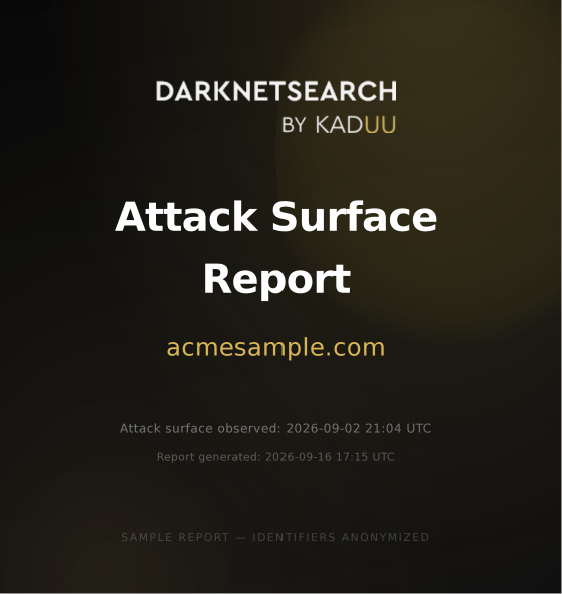
Using DarknetSearch ASM Reports to Investigate Potential PHP2Shell Exposure
Its ASM Report can support investigations into potential vulnerability exposure by helping security teams identify internet-facing assets and prioritize systems requiring additional verification.
In a situation such as PHP2Shell, this approach can be especially useful.
Rather than relying exclusively on an existing list of known servers, organizations can begin with a broader assessment of their internet-facing infrastructure.
A practical workflow involves several stages.
1. Discover Internet-Facing Assets
The first step is identifying domains, subdomains, servers, and other externally exposed infrastructure associated with the organization.
Attack surface mapping can reveal assets that may not appear in the primary IT inventory.
These findings help security teams establish which systems should be included in a vulnerability investigation.
2. Identify Potential PHP Exposure
Once relevant assets have been discovered, analysts can examine available technology indicators and configuration information.
Where the ASM assessment provides relevant technology or vulnerability indicators, those findings can help prioritize PHP-related assets.
However, identifying a PHP-based service should be treated as an exposure indicator, not definitive proof of PHP2Shell vulnerability.
3. Prioritize Potentially Vulnerable Systems
Not every exposed asset represents the same level of risk.
An internet-facing production application handling customer data typically deserves greater attention than an isolated development environment with restricted access.
Security teams should consider internet accessibility, business criticality, known technology information, and the potential impact of compromise.
An ASM Report can contribute to this prioritization by providing context about externally visible assets.
4. Validate Findings
Potential exposure must be confirmed through appropriate technical checks.
Administrators should verify the installed PHP runtime versions using authenticated access, configuration inventories, package information, or suitable vulnerability assessment tools.
If the relevant runtime is outdated, patching should follow immediately.
External reconnaissance alone cannot reliably establish whether PHP2Shell exploitation will succeed against a particular server.
5. Repeat the Assessment
Attack surfaces change continuously.
Cloud resources are deployed, software is updated, new subdomains are created, and legacy services may unexpectedly become publicly accessible.
Repeating external attack surface assessments helps organizations detect changes and maintain a more accurate understanding of potential exposure.
This makes ASM particularly valuable as a continuing security practice rather than a one-time response to a critical vulnerability.
ASM Is Not the Same as Exploit Verification
An important distinction should be maintained between discovering potential vulnerability exposure and confirming exploitability.
An ASM Report may identify a server, reveal relevant infrastructure information, or highlight conditions that warrant investigation.
It does not necessarily demonstrate that a particular PHP2Shell exploit can be executed successfully.
Real-world exploitability depends on factors including the PHP runtime version, server configuration, deployment architecture, request handling, and available security mitigations.
Similarly, a system that appears protected by a web application firewall may still require patching.
The purpose of ASM is to improve visibility and help direct investigation toward assets that might otherwise remain unnoticed.
When combined with authenticated vulnerability assessments, security logs, and patch management, it becomes part of a more complete defensive process.
What Security Teams Should Do Immediately
Organizations that use PHP should take several actions in response to PHP2Shell.
First, identify all PHP installations. Include production websites, internal applications, development environments, managed infrastructure, and externally hosted services.
Second, update vulnerable PHP versions. Apply the emergency releases or corresponding vendor-supported security updates. Unsupported branches should be replaced with supported versions.
Third, review historical activity. Examine relevant web server logs, application logs, and security telemetry for suspicious requests or unexpected behavior during the period preceding disclosure.
Fourth, investigate unusual server activity. Unexpected process execution, suspicious file modifications, or anomalous outbound connections may warrant further incident-response investigation.
Fifth, verify vendor-managed environments. Organizations using managed hosting should confirm whether their providers have deployed the required patches.
Finally, improve continuous asset visibility. Establish a process for identifying new internet-facing assets and reassessing their security posture.
Temporary network restrictions and appropriate WAF controls may help reduce exposure where immediate patching is impossible.
However, they should not be treated as complete substitutes for updating PHP.
What PHP2Shell Teaches Us About Vulnerability Management
PHP2Shell illustrates a recurring problem in cybersecurity.
Critical vulnerabilities often generate immediate demand for patches, but patching becomes difficult when organizations do not know exactly where affected technologies are deployed.
The problem is not always a lack of security tools.
It can be a lack of visibility.
An organization might possess advanced endpoint protection, a security operations center, and a mature incident response process while overlooking a publicly accessible legacy application.
That single forgotten application may still provide attackers with an opportunity.
A more resilient security strategy combines several disciplines: asset discovery, vulnerability management, threat intelligence, monitoring, and remediation.
DarknetSearch ASM Reports can contribute to this strategy by helping security teams map their external exposure and investigate potentially vulnerable infrastructure.
For Managed Security Service Providers, the same approach can support assessments across multiple customers, particularly when responding to newly disclosed vulnerabilities that may affect widely deployed technologies.
The operational value lies in turning an urgent security announcement into an organized process of discovery, verification, and remediation.
Conclusion: You Cannot Patch What You Cannot Find
The disclosure of PHP2Shell on October 21, 2026, demonstrates how vulnerabilities in widely used technologies can rapidly become a global security concern.
With critical remote code execution weaknesses, publicly discussed exploitation techniques, and evidence of malicious activity preceding disclosure, organizations should treat PHP2Shell as an urgent remediation priority.
Updating vulnerable PHP installations remains the most important defensive measure.
But effective remediation begins with knowing which systems exist and which technologies they use.
Attack Surface Management helps bridge the gap between vulnerability intelligence and real-world infrastructure visibility.
By using tools such as the DarknetSearch ASM Report to identify potentially exposed assets, security teams can make their vulnerability investigations more systematic and focused.
Ultimately, the objective is not simply to react faster to the next critical CVE.
It is to establish continuous visibility into the infrastructure that attackers can see.
Explore your external attack surface
Discover how DarknetSearch can help your organization identify internet-facing assets and investigate potential security exposure through Attack Surface Management reports.
Discover how CISOs, SOC teams, and risk leaders use our platform to detect leaks, monitor the dark web, and prevent account takeover.
🚀Explore use cases →