Fake Nuclear Alerts in Russia and Ukraine: Cyberattack Risks
➤Summary
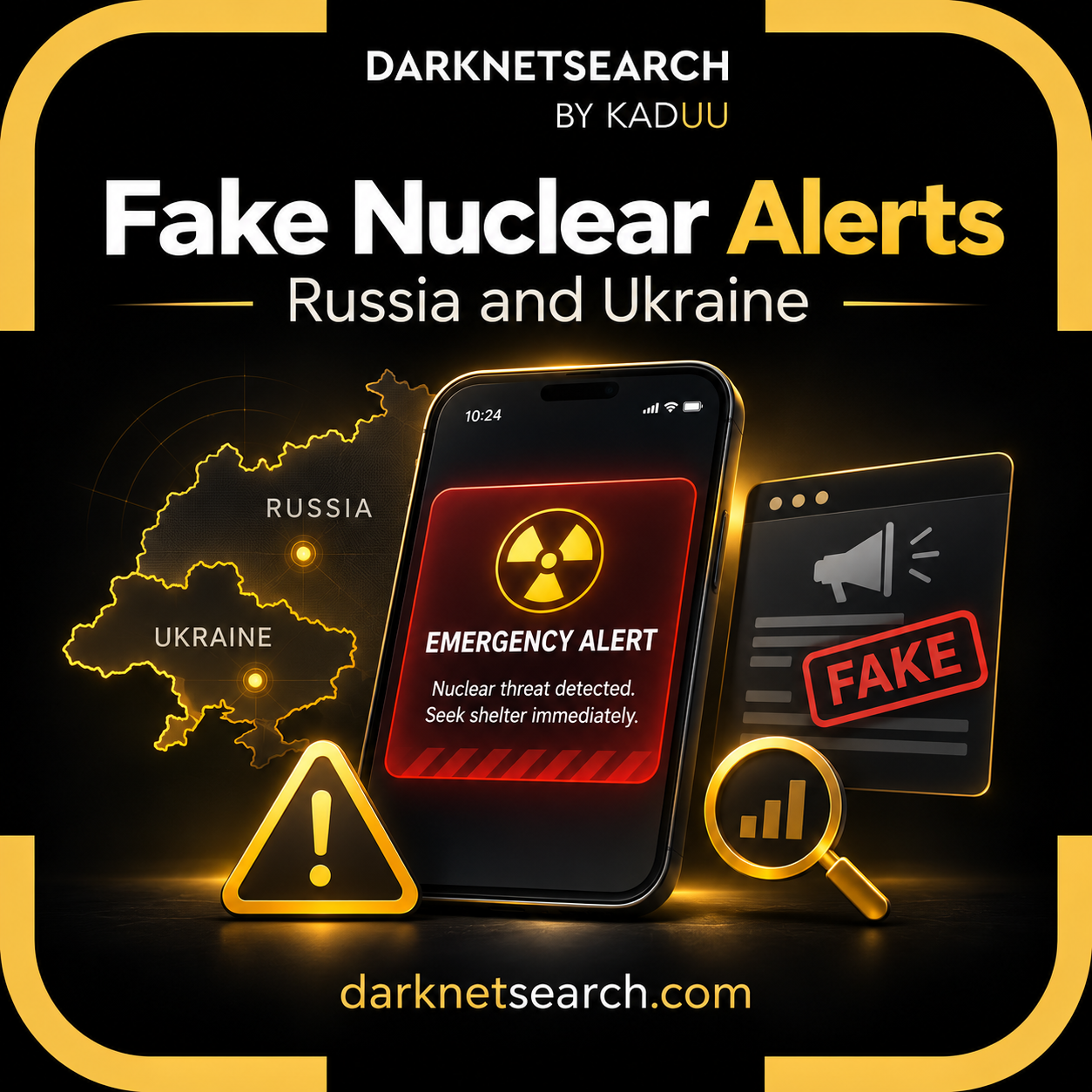
Fake nuclear alerts sent through emergency warning applications in Russia and Ukraine on November 1–2, 2026, exposed a dangerous cybersecurity weakness: attackers can potentially turn trusted public safety communication into a channel for disinformation. Residents received fabricated warnings about radiation, chemical attacks, nuclear weapons, and street fighting. Authorities subsequently clarified that the threats were false and attributed the messages to interference with their alert applications.
The incidents demonstrate how compromising the integrity of digital warnings can create security consequences without stealing sensitive databases or disrupting physical infrastructure.
For CISOs, SOC analysts, and incident responders, the events offer important lessons about critical communications, incident verification, and the expanding role of cyber operations in psychological warfare.

What Happened During the Fake Nuclear Alerts?
Late on November 1, users of Ukraine’s Air Alert application began receiving unusual emergency notifications.
The application normally warns residents about incoming missiles, drones, and other security threats. Its reliability is particularly important because civilians may use these notifications to decide when to seek shelter.
Instead, users received alarming messages describing several supposed emergencies.
These included radiation hazards in Kyiv, chemical attacks, street fighting, and an alleged incoming strike involving Russia’s Oreshnik missile.
Some messages contained unusual language, including Russian-language text that raised suspicion among recipients.
Ukraine’s Air Force indicated that the application had likely been subjected to hostile interference and publicly stated that there was no radiation threat.
Authorities temporarily suspended the affected application while clarifying the situation through alternative communication channels.
Hours later, Russia’s Ministry of Emergency Situations reported that its own public warning application had been targeted by a cyberattack.
Russian users received fabricated messages warning about nuclear warheads and urging emergency preparations.
The ministry acknowledged the dissemination of false information and announced restoration efforts.
The incidents were reported in detail by Al Jazeera’s November 2 investigation into the hacked warning alerts.
Were There Actual Nuclear or Radiation Threats?
No confirmed nuclear or radiation emergency accompanied these particular notifications.
Ukrainian authorities explicitly denied the reported radiation danger, while Russian officials identified the messages circulating through their affected application as false.
This distinction matters because a warning issued through an apparently legitimate application can be mistaken for an independently verified emergency.
A compromised notification channel is not equivalent to a real nuclear incident.
Likewise, the alerts do not establish that nuclear facilities, radiation monitoring equipment, or weapons systems were compromised.
The publicly available reporting concerns interference with emergency communication applications, not a confirmed intrusion into nuclear infrastructure.
Security teams should communicate such distinctions clearly, particularly when incidents involve emotionally charged subjects.
Why Emergency Alert System Cyberattacks Are So Dangerous
Emergency applications operate within an unusually sensitive trust relationship.
Unlike ordinary commercial notifications, official warnings may influence immediate decisions affecting personal safety.
A convincing false alert can therefore produce consequences even when the attacker has no access to physical systems.
Manipulating public behavior
False emergency messages can encourage people to shelter unnecessarily, abandon planned activities, contact relatives, or overload emergency communication services.
The actual behavioral impact of the November incidents varied, and reports did not establish widespread panic.
Nevertheless, the potential for disruption illustrates why notification integrity is a critical security requirement.
Undermining trust in legitimate warnings
A second concern is alert fatigue.
If users repeatedly encounter unreliable notifications, they may become less responsive when genuine warnings arrive.
In conflict environments, this creates a particularly troubling possibility: distrust generated by one cyber incident could weaken responses to later emergencies.
Amplifying disinformation
Attackers do not necessarily need to control an entire media ecosystem.
A fabricated message originating from a recognized application can be captured, shared, and repeated across social networks.
The apparent authenticity of the original notification may help disinformation spread faster than corrections.
How Could Hackers Compromise Emergency Notifications?
The precise technical entry points used in the November incidents have not been publicly established.
It would therefore be misleading to identify a specific vulnerability or claim that attackers obtained administrator credentials.
However, several general attack paths are relevant when assessing notification-system security.
Compromised application infrastructure
Unauthorized access to backend infrastructure could potentially allow an attacker to modify notifications or trigger messages.
Administrative account takeover
If privileged credentials are stolen, attackers may gain access to tools used to manage communication workflows.
Strong authentication and tightly restricted privileges are essential safeguards.
Third-party service compromise
Applications often depend on external infrastructure for authentication, hosting, and message delivery.
Weaknesses in a trusted service provider can potentially create indirect access routes.
Abused integration permissions
An application programming interface or automation integration with excessive permissions may expose sensitive operations.
These are plausible security scenarios, not confirmed explanations of the Russia and Ukraine attacks.
Determining the actual mechanism would require technical investigation and authoritative disclosure.
Cyber Warfare and the Weaponization of Public Trust
The incidents occurred against the background of Russia’s ongoing war against Ukraine, where digital operations have become an important component of the broader conflict.
Cyberattacks may target availability, confidentiality, or integrity.
Emergency-alert manipulation primarily raises an integrity concern: the system may continue delivering messages, but the content cannot be trusted.
This differs from a conventional distributed denial-of-service attack that simply makes a service unavailable.
It also differs from a typical data breach involving unauthorized access to confidential records.
In this case, the principal reported effect was false information presented through trusted channels.
Although officials and commentators discussed potential responsibility, publicly available evidence did not conclusively establish the perpetrators or prove that the attacks in both countries were coordinated.
Security analysts should avoid treating geographical proximity, timing, or political accusations as definitive technical attribution.
What Dark Web Monitoring Can and Cannot Reveal
The emergency-alert incidents do not establish that credentials were stolen, confidential databases were leaked, or attackers advertised access on dark web marketplaces.
However, organizations investigating similar compromises may benefit from examining external threat intelligence for relevant exposure indicators.
These could include compromised employee credentials, criminal discussions about access to notification platforms, or malicious infrastructure associated with an investigated campaign.
DarknetSearch’s explanation of dark web monitoring and related intelligence disciplines highlights why useful intelligence extends beyond traditional dark web websites.
Relevant information may also appear in messaging platforms, leak repositories, stealer-log collections, and other external environments.
Still, external monitoring cannot independently establish how a particular alerting system was compromised.
It should complement application logs, access reviews, forensic investigations, and verified incident reports.
Why Compromised Credentials Deserve Investigation
Privileged accounts are especially important when reviewing the security of emergency communication systems.
If attackers acquire valid credentials associated with administration, deployment, or messaging services, they may be able to misuse legitimate functionality.
A defensive investigation should therefore examine authentication events, permissions, recent account changes, and possible credential exposure.
However, discovering an email address in a historical dataset is not proof that an account was compromised during the current incident.
DarknetSearch’s analysis of traditional credential monitoring limitations explores the importance of distinguishing relevant exposure from outdated, duplicated, or fragmented records.
Context is essential before attributing any particular credential to a reported attack.
Seven Security Lessons for Critical Communication Systems
Organizations responsible for emergency warnings, healthcare notifications, financial alerts, and other high-trust communications should consider the following controls.
- Protect privileged identities. Require strong authentication, preferably phishing-resistant methods, for administrative and publishing accounts.
- Separate notification permissions. Restrict who can create, approve, modify, and distribute critical messages.
- Verify high-impact announcements. Introduce additional approval or verification for exceptional messages involving major public safety threats.
- Monitor unusual publishing activity. Investigate unexpected notification volumes, changes in message language, unfamiliar administrator sessions, and abnormal API activity.
- Establish independent verification channels. Maintain reliable alternative ways to communicate official warnings if an application becomes unavailable or untrustworthy.
- Prepare rapid correction procedures. Incident-response teams should be able to identify fraudulent messages, suspend affected functionality, and issue authenticated corrections.
- Test communication integrity. Exercises should evaluate not only system outages but also unauthorized, misleading, or contradictory notifications.
These safeguards do not eliminate every possible attack, but they can reduce opportunities for manipulation and improve recovery.
What CISOs and MSSPs Should Learn From This Incident
For security leaders, the central lesson is that cyber resilience extends beyond preventing data theft.
An organization can suffer significant disruption when attackers alter information that employees, customers, or the public believe to be trustworthy.
MSSPs and SOC teams should therefore assess critical communication services as part of the broader attack surface.
Their investigations should consider exposed administrative interfaces, identity security, third-party dependencies, suspicious infrastructure, and unauthorized changes to published information.
Organizations should also define which systems require stronger verification than ordinary business applications.
The potential consequences of a misleading emergency message are fundamentally different from those of a routine notification error.
Frequently Asked Questions
Were nuclear radiation levels elevated in Russia or Ukraine?
Authorities did not confirm a nuclear or radiation emergency associated with the fabricated alerts reported on November 1–2, 2026. Ukraine’s Air Force explicitly denied the radiation threat, and Russian authorities described notifications circulating through their affected emergency application as false.
Who hacked the emergency alert applications?
The perpetrators have not been conclusively established in the publicly available reporting. Although accusations and claims circulated, these should not be treated as verified attribution. It also remains unproven that the attacks affecting the two countries were coordinated.
Can hackers send fake emergency warnings through legitimate applications?
Yes. If attackers obtain sufficient unauthorized access to notification infrastructure, administrative systems, or trusted integrations, they may be able to distribute messages through legitimate channels. The exact technical method depends on the application architecture and the weaknesses exploited.
Can dark web monitoring prevent emergency alert system attacks?
No. Dark web monitoring cannot guarantee prevention of application compromise or fraudulent notifications. It may help investigators identify externally exposed credentials and relevant threat indicators, but secure application architecture, identity controls, monitoring, and incident response remain essential.
Strengthen External Threat Visibility and Communication Security
The fake nuclear alerts in Russia and Ukraine demonstrate a cybersecurity risk that extends beyond data breaches: attackers can target the integrity of information people depend on for safety.
Organizations should protect critical communication systems while monitoring external exposure that could provide attackers with additional opportunities.
DarknetSearch helps security teams investigate external cyber risks, including compromised credentials and threat intelligence from monitored sources.
For organizations seeking to strengthen external threat visibility, exploring DarknetSearch’s monitoring capabilities can be a practical complement to identity protection, application security, and incident-response readiness.
Discover how CISOs, SOC teams, and risk leaders use our platform to detect leaks, monitor the dark web, and prevent account takeover.
🚀Explore use cases →