
Match Group Leak 2026: Urgent Data Breach Impact Guide

➤Summary
Match Group database leak incidents have once again highlighted how vulnerable even major global platforms remain in the face of advanced cybercrime. In January 2026, the notorious hacking collective ShinyHunters published claims on breachforums.bf, revealing the theft of massive volumes of confidential data from Match Group, the parent company of popular dating platforms including Tinder, OkCupid, Hinge, and Plenty of Fish. This breach reportedly exposed sensitive corporate documents, user archives, financial invoices, and internal reports, raising global cybersecurity alarms 🚨.
According to underground intelligence sources, the attackers exfiltrated internal databases, private operational records, and extensive user-related datasets, placing millions of individuals and business operations at risk. The disclosure not only underscores the importance of dark web monitoring report practices but also intensifies discussions around cybersecurity laws and regulations. As organizations scramble to mitigate fallout, experts stress that proactive surveillance and threat intelligence capabilities remain critical in today’s digital battlefield.
What Happened in the Match Group Database Leak?
The Match Group database leak was first publicly disclosed on breachforums.bf on January 27, 2026. The attackers, operating under the alias SHINYHUNTERS, claimed responsibility for infiltrating Match Group’s infrastructure and extracting confidential information.

Key Breach Details
| Attribute | Information |
| Victim | Match Group |
| Attacker | ShinyHunters |
| Leak Source | breachforums.bf |
| Date Published | 27.01.2026 |
| Data Compromised | Archives, user data, invoices, reports |
| Threat Type | Data breach & extortion |
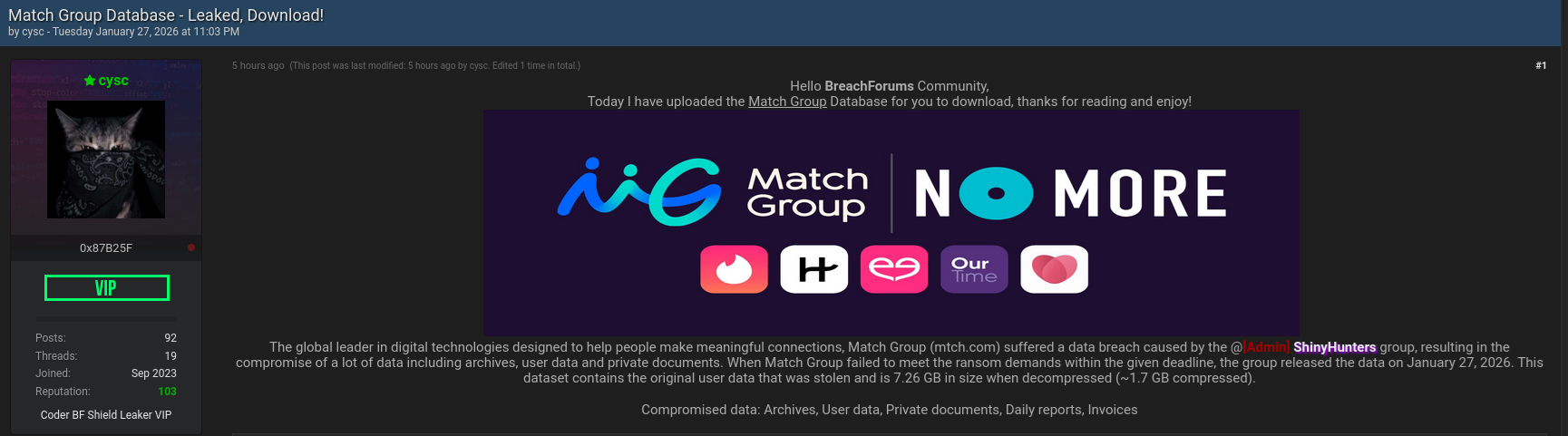
The breach included archives, private documents, daily operational reports, financial invoices, and user data, presenting both financial and reputational risk. Security analysts believe the attackers exploited internal access points and misconfigurations, allowing lateral movement across backend systems.
Who Are ShinyHunters and Why Do They Matter?
ShinyHunters is one of the most infamous cybercrime collectives known for high-profile breaches targeting global brands, enterprises, and government organizations. Their operations frequently involve data theft, leak-site extortion, and monetization through underground marketplaces.
Over the years, ShinyHunters has been linked to numerous mega-breaches, making them a central focus of dark web monitoring strategies worldwide. Their continued success demonstrates why organizations must compare dark web monitoring tools to ensure advanced detection, rapid alerts, and contextual intelligence.
Scope and Impact of the Match Group Data Exposure
The Match Group database leak is alarming due to both its volume and sensitivity. The stolen dataset reportedly includes:
- User account data
- Archived communications
- Private business documents
- Financial invoices
- Internal daily operational reports
This exposes individuals to identity theft, phishing, account takeovers, financial fraud, and reputational harm 😨.
Business Risks Include:
- Regulatory penalties
- Litigation exposure
- Revenue losses
- Brand trust erosion
- Partner contract terminations
How the Leak Was Discovered on the Dark Web
Cyber threat analysts tracking underground forums first identified references to Match Group on breachforums.bf, a popular dark web leak-sharing platform. Continuous surveillance using advanced dark web monitoring report tools allowed early confirmation of authenticity.
Security teams leverage platforms like https://darknetsearch.com/ to detect early breach signals, enabling faster response and containment strategies.
Why Dark Web Monitoring Is Now Business-Critical
Proactive dark web monitoring is no longer optional. It provides organizations with early warning systems that detect stolen data, breach mentions, and underground trade listings before damage escalates.
Core Benefits of Monitoring:
- Early breach detection
- Reduced regulatory exposure
- Faster containment
- Improved forensic readiness
- Lower reputational damage
The Role of Cybersecurity Laws and Regulations
The Match Group incident reinforces the importance of compliance with global cybersecurity laws and regulations such as GDPR, CCPA, HIPAA, and regional data protection frameworks.
Failure to comply can lead to:
- Multi-million-dollar penalties
- Mandatory disclosure obligations
- Regulatory investigations
- Severe reputational damage
Governments worldwide are strengthening cyber legislation, forcing enterprises to invest in breach detection and reporting capabilities ⚖️.
Real-World Risks for Users: What Should Victims Do?
Question: Should Match Group users be concerned?
Answer: Yes — exposed personal and communication data can fuel identity fraud, stalking, blackmail, and phishing attacks.
Immediate Protective Actions:
- Reset all passwords
- Enable multi-factor authentication
- Monitor credit reports
- Watch for phishing messages
- Avoid suspicious links
How Attackers Monetize Leaked Data
Stolen information typically circulates through:
- Dark web forums
- Encrypted messaging groups
- Criminal marketplaces
- Private broker networks
Threat actors sell datasets, conduct extortion, and enable identity theft schemes, making breach data extremely valuable 💰.
Checklist: How Organizations Can Prevent Similar Breaches
Practical Security Checklist ✅
- Implement zero-trust architecture
- Conduct frequent penetration testing
- Monitor privileged accounts
- Deploy behavioral analytics
- Enable continuous dark web monitoring
- Perform regular incident simulations
Match Group Incident Timeline
| Date | Event |
| Jan 27, 2026 | Leak published on breachforums |
| Jan 28, 2026 | Media coverage begins |
| Jan 29, 2026 | Internal forensic investigation launched |
| Jan 30, 2026 | Regulatory disclosure preparations |
Why Breach Monitoring Must Include Dark Web Intelligence
Modern breaches often surface first on underground platforms. Integrating monitoring systems with intelligence feeds ensures organizations receive alerts within minutes of disclosure.
This proactive stance drastically reduces damage scope and supports compliance readiness.
Lessons for Enterprises: Cybersecurity Must Be Proactive, Not Reactive
Cybersecurity experts emphasize:
“Early detection saves millions. Monitoring underground ecosystems is now fundamental to enterprise resilience.”
Organizations investing in dark web monitoring report platforms gain strategic intelligence that helps mitigate attacks before public exposure.
External Context: Rising Data Extortion Trends
According to DarkReading’s investigation into extortion gangs, cybercriminals are increasingly targeting consumer-facing enterprises with massive user databases, amplifying public exposure risks.
Strategic Security Improvements After the Match Group Leak
Post-breach recovery strategies should include:
- Network segmentation
- Credential hygiene
- Patch automation
- Continuous threat hunting
- Vendor risk management
- Legal compliance audits
The Growing Importance of Cyber Resilience Programs
With threat groups evolving rapidly, enterprises must move beyond traditional perimeter defense models. Cyber resilience focuses on:
- Prevention
- Detection
- Response
- Recovery
Together, these create a holistic defense posture against emerging cyber threats 🔐.
How Enterprises Can Strengthen Dark Web Intelligence
Key implementation steps:
- Deploy real-time monitoring tools
- Integrate threat intelligence feeds
- Use AI-powered correlation engines
- Automate breach alerting workflows
- Conduct routine exposure audits
Why This Breach Matters Globally
With Match Group operating worldwide, this incident demonstrates how cybercrime transcends borders, emphasizing international cooperation and harmonized cybersecurity laws and regulations.
Final Thoughts: The Wake-Up Call for Digital Enterprises
The Match Group database leak is a stark reminder that no organization is immune. With attackers constantly refining techniques, businesses must remain vigilant, adaptive, and intelligence-driven. Proactive detection, real-time monitoring, and legal compliance form the foundation of modern cyber defense 🛡️.
Conclusion: Protect Your Organization Before the Next Breach Strikes
Cybercrime is accelerating. Enterprises must adopt real-time intelligence, advanced detection, and continuous risk monitoring to prevent catastrophic data exposure. Don’t wait until your organization appears on breach forums. Invest in cyber resilience now.
Discover much more in our complete guide
Request a demo NOW
Discover how CISOs, SOC teams, and risk leaders use our platform to detect leaks, monitor the dark web, and prevent account takeover.
🚀Explore use cases →