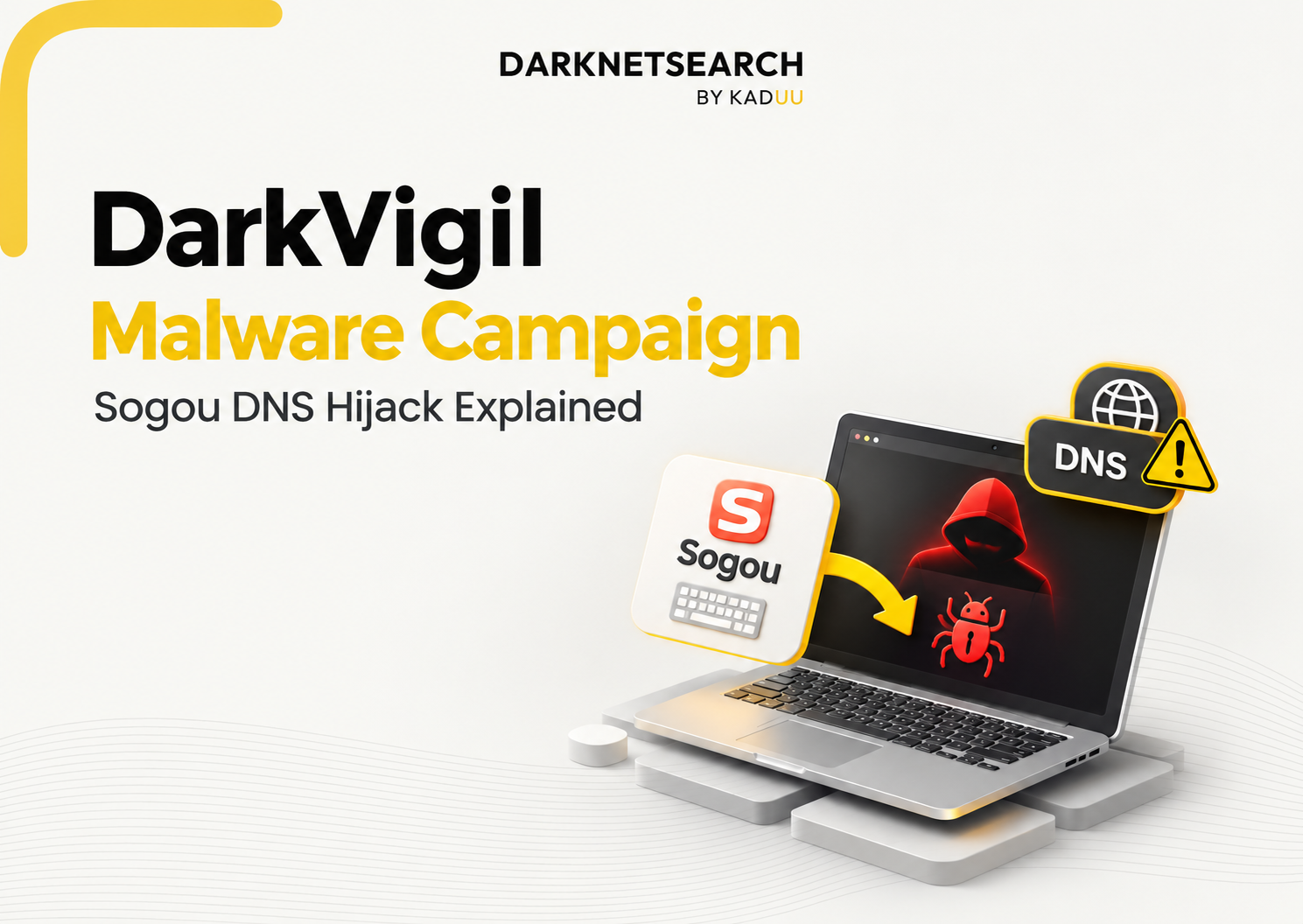
The DarkVigil malware campaign demonstrates how attackers can exploit trusted software communications to deliver sophisticated espionage tools without directly compromising the software vendor. Security researchers have uncovered a China-aligned operation that manipulated DNS responses associated with Sogou Input Method, a widely used Chinese keyboard application, to install a modular surveillance implant on Windows devices.
The campaign, attributed by ESET Research to a threat actor called SlippyNunchucks, targeted organizations and Chinese-speaking individuals across several countries. Rather than relying on conventional phishing, the attackers exploited insecure HTTP communications to redirect legitimate application requests toward malicious infrastructure.
The discovery highlights growing risks associated with software trust, DNS manipulation, and advanced persistent threats (APTs). It also raises important questions about how security teams can detect suspicious infrastructure, investigate malware communications, and reduce their exposure to targeted cyber espionage.
What Is the DarkVigil Malware Campaign?
The DarkVigil malware campaign is a cyber espionage operation associated with SlippyNunchucks, a China-aligned threat group active since at least September 2023.
The group deploys DarkVigil, also known as FDMTP, a modular malware framework capable of establishing remote communications, executing additional components, and collecting information from compromised systems.
ESET Research has tracked the malware ecosystem since 2025.
On November 4, 2026, researchers disclosed that SlippyNunchucks had exploited insecure communications within the Windows version of Sogou Input Method.
The operation involved CVE-2026-120422, a vulnerability addressed in Sogou Input Method version 16.10.
According to the original ESET Research investigation, attackers manipulated DNS resolution to redirect application configuration requests toward infrastructure under their control.
The resulting configuration instructed legitimate application components to retrieve and execute malicious files.
Importantly, researchers did not establish that Tencent’s official update servers were directly compromised.
How Hackers Exploited Sogou Input Method
Sogou Input Method, also called Sogou Pinyin, is a popular application for entering Chinese characters on computers and mobile devices.
The Windows software includes functionality that retrieves configuration information for features such as branded vocabulary promotions.
Researchers discovered that some of these requests used unencrypted HTTP communications.
This created an opportunity for attackers able to influence DNS resolution.
Step 1: Manipulating DNS Responses
The attackers redirected requests intended for the legitimate Sogou configuration infrastructure.
Instead of reaching the expected server, affected requests were routed toward attacker-controlled systems.
Because the relevant communications lacked HTTPS protection, the application could receive malicious configuration data without the authentication normally provided by TLS.
ESET has not determined exactly where the DNS manipulation occurred.
Possible scenarios include compromised routers, malicious DNS configurations, or network-level interception.
These remain hypotheses rather than confirmed details of the intrusion method.
Step 2: Delivering a Malicious Configuration
The attack targeted requests made by SGTool.exe, a legitimate Sogou Input Method component.
The attackers supplied configuration data that instructed the application to download additional files.
These included a legitimate Adobe executable and a malicious DLL containing the DarkVigil implant.
The configuration directed the files into locations used by Sogou’s existing component-management workflows.
Step 3: Executing DarkVigil Through DLL Sideloading
The malicious DLL was executed through DLL sideloading.
This technique involves placing a malicious library where a legitimate executable will load it.
By abusing existing application behavior, the attackers could execute their payload without requiring users to launch an obviously suspicious program.
The campaign illustrates how legitimate software functionality can become an effective malware delivery mechanism when network communications and component validation are insufficiently protected.
Who Was Targeted by SlippyNunchucks?
ESET observed DarkVigil activity involving organizations and Chinese-speaking individuals in:
- Hong Kong
- Thailand
- Japan
- Vietnam
- Oman
- Sri Lanka
Additional victims identified during broader investigations included individuals and organizations elsewhere in Asia and Europe.
The targeting pattern suggests an intelligence-gathering operation rather than an indiscriminate malware distribution campaign.
ESET assesses with high confidence that SlippyNunchucks operates in alignment with Chinese state interests.
However, attribution requires caution.
Although other researchers previously associated related malware with Mustang Panda, ESET reported no corresponding overlap in its own telemetry and tracks SlippyNunchucks as a separate threat cluster.
Why DarkVigil Is a Sophisticated Espionage Tool
DarkVigil is more than a conventional malware downloader.
The framework is built using .NET technologies and incorporates more than 20 known plugins.
Its modular architecture allows operators to extend functionality after an initial infection.
Command-and-Control Communications
DarkVigil uses the Duplex Message Transport Protocol (DMTP) for command-and-control communications.
The framework supports bidirectional messaging between infected devices and attacker-controlled servers.
This architecture enables operators to manage implants, deliver plugins, and collect information from compromised environments.
Modular Data Collection
Depending on the plugins deployed, the framework can support remote operations and information collection.
Potential security consequences include unauthorized access to sensitive files, persistence, and data exfiltration.
These capabilities should not be confused with confirmed evidence that every identified victim experienced the same level of compromise.
Researchers also discovered infrastructure used to administer information collected by DarkVigil implants.
For SOC teams, this reinforces the importance of analyzing outbound communications alongside endpoint execution behavior.
DNS Hijacking, Malicious Domains, and Threat Intelligence
The DarkVigil malware campaign illustrates why DNS activity deserves attention during threat investigations.
Attackers do not always need to register convincing phishing websites or persuade employees to click malicious links.
In this case, the operation manipulated how an existing application reached its expected infrastructure.
Security teams should therefore investigate unexpected DNS answers, unusual destination IP addresses, and suspicious outbound connections.
Monitoring attacker-controlled domains and infrastructure can contribute to early investigation, although DNS manipulation alone does not necessarily indicate a newly registered malicious domain.
Complementary domain monitoring and brand protection can help organizations identify impersonation domains and other external domain threats, while network security controls address DNS interception and unauthorized traffic redirection.
These are distinct risks requiring complementary defenses.
How Security Teams Can Detect DarkVigil Activity
Detecting this campaign requires multiple sources of evidence.
External threat intelligence provides context, while endpoint and network telemetry help establish whether a particular environment has been compromised.
Investigate Suspicious Network Connections
Security teams should review DNS responses and outbound communications associated with affected Sogou installations.
Relevant investigation targets include reported staging infrastructure and suspicious connections associated with DarkVigil command-and-control activity.
Historical logs may reveal earlier interactions even after infrastructure changes.
Examine Endpoint Artifacts
Incident responders should inspect unexpected executable files and DLLs in Sogou application directories.
Particular attention should be paid to suspicious instances of libcef.dll and unexpected execution involving renamed application components.
File presence alone is not sufficient for attribution.
Investigators should correlate file hashes, execution chains, network connections, and other endpoint evidence.
Use Threat Intelligence to Prioritize Investigations
Threat intelligence can help analysts connect indicators with known adversary behavior.
For example, infrastructure relationships, malware families, and campaign timelines can help distinguish isolated suspicious events from broader targeted operations.
DarknetSearch has previously examined related risks involving malicious software distribution in its article on North Korean npm supply chain attacks.
Both cases demonstrate how trusted software ecosystems can become channels for malicious code.
How to Mitigate the Sogou Vulnerability
Tencent addressed CVE-2026-120422 in Sogou Input Method version 16.10, released in late October 2026.
The update changes affected communications from HTTP to HTTPS and introduces stronger validation of server connections.
Organizations should take the following actions:
- Update Sogou Input Method. Deploy version 16.10 or a newer corrected release.
- Review application inventories. Identify devices using vulnerable versions.
- Investigate existing infections. Updating software does not automatically remove previously installed malware.
- Secure DNS infrastructure. Audit resolver settings, routers, and network configurations.
- Monitor outbound traffic. Investigate unexpected connections to suspicious infrastructure.
- Strengthen endpoint detection. Examine unusual DLL loading, persistence mechanisms, and executable behavior.
- Assess third-party software risks. Review applications that retrieve configurations or executable components from external sources.
These actions address both the disclosed weakness and broader risks associated with trusted application abuse.
The Role of DarknetSearch in Threat Intelligence Operations
The DarkVigil campaign demonstrates why security teams benefit from combining technical investigation with broader cyber threat intelligence.
DarknetSearch helps organizations monitor external exposure, investigate compromised credentials, and assess risks associated with their digital footprint.
For MSSPs and SOC analysts, this intelligence can complement internal detection tools when investigating emerging campaigns.
Relevant workflows include monitoring external threats, examining exposed organizational assets, and prioritizing risks identified through attack surface assessments.
DarknetSearch also explores how intelligence platforms can support investigations involving advanced threat actors in its UAT-8302 threat intelligence guide.
However, dark web monitoring does not automatically identify every malware infection.
Endpoint detection, network analysis, and incident response remain necessary for determining whether DarkVigil has compromised an organization.
Frequently Asked Questions
What is DarkVigil malware?
DarkVigil, also called FDMTP, is a modular .NET malware framework associated with the SlippyNunchucks threat actor. It supports command-and-control communications, plugin execution, and information collection. Researchers have linked its deployment to compromised software distribution mechanisms and the abuse of legitimate applications.
How did hackers use Sogou Input Method to distribute malware?
Attackers manipulated DNS resolution for configuration requests made by the Windows application. Because affected requests used unencrypted HTTP, malicious servers could return altered configuration data that instructed legitimate Sogou components to download and execute DarkVigil.
Has the Sogou Input Method vulnerability been fixed?
Yes. Tencent addressed CVE-2026-120422 in Sogou Input Method version 16.10 by protecting affected communications with HTTPS and enhanced certificate validation. Organizations should update vulnerable installations and investigate possible compromises that occurred before remediation.
Is DarkVigil associated with Mustang Panda?
Attribution remains disputed. Some earlier reporting connected related malware to Mustang Panda, but ESET’s investigation found no corresponding overlap in its telemetry. ESET tracks the operation under the separate SlippyNunchucks designation and assesses it as China-aligned.
Strengthen External Threat Visibility Against Advanced Malware
The DarkVigil malware campaign demonstrates how sophisticated attackers can exploit trusted software communications to establish access without conventional phishing or direct exploitation of public-facing servers.
Organizations need accurate threat intelligence, visibility into exposed assets, and coordinated investigation procedures to respond effectively.
DarknetSearch supports security teams and MSSPs with external exposure monitoring, cyber threat intelligence, and actionable risk assessments.
Explore DarknetSearch’s threat intelligence and monitoring capabilities to strengthen your understanding of emerging threats and help prioritize the security risks that matter most.