Dark Web Monitoring: Baker Breach Key Risks Revealed
➤Summary
Dark web monitoring is the process of continuously scanning hidden online marketplaces, forums, and leak sites to identify exposed corporate or personal information before criminals can exploit it. As cybercriminal groups increasingly publish stolen data on underground platforms, organizations need proactive visibility into emerging threats.
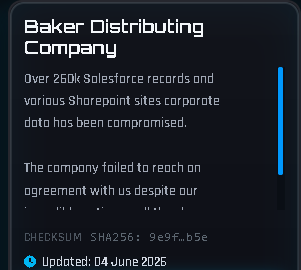
A recent example involves the alleged Baker Distributing Company data breach, which was reportedly published by the ShinyHunters threat actor on its onion-based leak site. According to the published claims, the exposed information includes customer support records, employee account information, customer contact details, and business account data. Incidents like this demonstrate why organizations increasingly rely on dark web monitoring to identify potential exposure early and reduce cyber risk. 🔎

Understanding the Baker Distributing Company Data Exposure
According to information published by the ShinyHunters ransomware and data extortion group, the leaked dataset allegedly contains a significant volume of corporate and customer information.
The exposed records reportedly include:
- Customer support tickets and case management data
- Customer contact information
- Business account information
- Employee records and user account details
- Administrative access information
- Account creation and modification records
The dataset allegedly contains support case numbers, assigned personnel, timestamps, internal comments, customer inquiries, employee numbers, user roles, and account management information.
While organizations continue investigating incidents after public disclosure, the publication of data on criminal leak sites often creates immediate security concerns for customers, employees, and business partners. ⚠️
What Is Dark Web Monitoring?
Dark web monitoring refers to the continuous collection and analysis of data from underground forums, marketplaces, ransomware leak sites, and illicit communication channels where stolen information is frequently traded.
The purpose is simple:
- Detect exposed corporate information.
- Identify compromised employee credentials.
- Discover leaked customer records.
- Monitor emerging threats.
- Alert organizations before attackers expand their operations.
Without visibility into these environments, businesses often learn about exposures long after cybercriminals have already weaponized the data.
How Dark Web Monitoring Works
Organizations use specialized platforms to monitor hidden areas of the internet for indicators of compromise.
A typical process includes:
| Step | Description |
| Collection | Gather data from forums, marketplaces, leak sites, and underground communities |
| Analysis | Identify references to organizations, domains, employees, and customers |
| Correlation | Match discovered data against known assets |
| Validation | Determine whether exposure is legitimate |
| Alerting | Generate actionable dark web alerts |
| Response | Initiate remediation and investigation |
Modern solutions such as DarknetSearch automate this process and provide rapid notification when sensitive business information appears in underground communities.
Organizations seeking proactive protection can learn more through https://darknetsearch.com/ and explore monitoring capabilities designed for enterprise environments.
What Data Was Allegedly Exposed?
Based on the published claims, the compromised information may include several high-risk categories.
Customer Support Information
Support case management records reportedly include:
- Case owners
- Assigned personnel
- Ticket subjects
- Customer inquiries
- Case comments
- Internal notes
- Resolution information
This type of information can provide attackers with valuable operational context.
Customer and Business Contact Data
The published description indicates exposure of:
- Names
- Job titles
- Departments
- Email addresses
- Phone numbers
- Mailing addresses
- Company information
- Customer identifiers
Attackers frequently use such information to create convincing phishing campaigns. 🎯
Employee Information
Employee-related records allegedly include:
- Employee names
- Usernames
- Company departments
- Employee numbers
- User roles
- Permission assignments
- Administrative details
This information can significantly improve an attacker’s understanding of an organization’s internal structure.
How Threat Actors Use Stolen Corporate Data
Why do cybercriminals value this information?
The answer is simple: data equals opportunity.
When threat actors obtain customer and employee information, they can launch highly targeted attacks.
Common attacker activities include:
- Business email compromise (BEC)
- Credential stuffing
- Account takeover attempts
- Social engineering
- Identity fraud
- Supply-chain targeting
For example, an attacker possessing employee names, departments, and support ticket details can craft realistic messages that appear legitimate to recipients.
This dramatically increases the success rate of phishing operations. 🚨
Business Risks Following Data Exposure
Organizations affected by data leaks face multiple layers of risk.
Financial Impact
Potential consequences include:
- Incident response costs
- Regulatory investigations
- Legal expenses
- Customer notification requirements
- Security remediation investments
Operational Disruption
Security teams may need to:
- Reset accounts
- Review permissions
- Audit systems
- Investigate unauthorized activity
- Monitor for lateral movement
Reputational Damage
Trust is difficult to build and easy to lose.
Customers, suppliers, and partners may question security practices after learning their information could be exposed.
Increased Targeting
Threat actors frequently revisit organizations whose data has already appeared on underground platforms.
This makes continuous data breach monitoring increasingly important for long-term security programs.
Real-World Example: Publicly Leaked Corporate Information
The Baker Distributing Company incident illustrates a growing trend among cybercriminal groups.
Rather than encrypting systems alone, many attackers now focus on stealing sensitive information and publishing it on leak sites to increase pressure on victims.
A similar pattern has been observed in numerous high-profile incidents documented by cybersecurity researchers and news organizations.
For example, BleepingComputer reported on government-related data exposure investigations following claims of stolen information being offered online:
These cases demonstrate how exposed information can quickly become a public security concern.
How to Check If My Data Is on the Dark Web
Many professionals ask: How to check if my data is on the dark web?
The most effective approach is to use specialized monitoring platforms that continuously scan underground sources for:
- Corporate domains
- Employee emails
- Customer records
- Credentials
- Internal documents
- Exposed databases
Manual searching is rarely practical because much of the activity occurs in hidden communities and restricted forums.
Automated dark web alerts provide significantly faster visibility when new exposures emerge. 📢
Detection and Mitigation Strategies
Organizations can reduce exposure risk through a layered approach.
Practical Security Checklist ✅
- Enable multi-factor authentication
- Monitor employee credentials
- Review privileged access regularly
- Implement continuous data breach monitoring
- Train employees against phishing
- Audit third-party vendors
- Establish incident response procedures
- Deploy domain reputation monitoring
- Utilize malicious domain detection capabilities
- Monitor ransomware leak sites
Combining these measures creates stronger resilience against evolving cyber threats.
How DarknetSearch Helps Organizations Detect Exposure
DarknetSearch helps organizations identify exposed information before attackers can fully exploit it.
Capabilities include:
- Dark web intelligence collection
- Continuous dark web monitoring
- Automated dark web alerts
- Credential exposure discovery
- Leak site tracking
- Executive and employee monitoring
- Threat intelligence reporting
Organizations can proactively investigate exposures and respond faster to emerging risks.
Protect Business From Dark Web Threats
Businesses cannot prevent every cyberattack.
However, they can dramatically improve visibility and response capabilities.
When employee information, customer records, support tickets, or account details appear in criminal communities, early detection often determines whether an incident becomes a minor security event or a major business crisis.
The alleged Baker Distributing Company exposure highlights how valuable operational and contact information can be to threat actors. Whether the target is a multinational enterprise or a growing regional business, visibility into underground activity has become a critical component of modern cybersecurity strategy. 🔐
Conclusion
As ransomware groups and data extortion actors continue publishing stolen information online, organizations need stronger intelligence capabilities to identify exposure quickly. Dark web monitoring provides an essential layer of defense by detecting compromised data, supporting investigations, and enabling faster response.
See if your company is exposed.
→ Start Free Trial
Discover much more in our complete guide
Request a demo NOW
Disclaimer: DarknetSearch reports on publicly available threat-intelligence sources. Inclusion of an organization in an article does not imply confirmed compromise. All claims are attributed to external sources unless explicitly verified.
Discover how CISOs, SOC teams, and risk leaders use our platform to detect leaks, monitor the dark web, and prevent account takeover.
🚀Explore use cases →