
10 Billion Passwords Leak Revealed: Urgent Guide to Dark Web Exposure

➤Summary
10 Billion passwords leak has emerged as a staggering cyber-security event, reported by a post on the forum HTDark by user dEEpEst on 05 November 2025. This massive dump of plaintext credentials is available for free in the hacker underground and highlights the urgent threat of credential reuse and unauthorized access 😱.
According to the cyber threat-intelligence team at Kaduu, the database was discovered during routine dark-web forum monitoring and is now circulating widely. For CISOs and security practioners, this incident is a wake-up call: weak password hygiene and unchecked data exposures continue to fuel enterprise-wide cyber-risk.
Below we explore what this leak means, how it surfaced, what users and organisations must do, and provide a practical checklist to respond swiftly and effectively.

How the 10 Billion Passwords Leak Surfaced
The leak was first posted on HTDark by “dEEpEst” on 05 November 2025, featuring the headline “10 Billions of Passwords publicly displayed for free”. The post includes a link to the compressed leak file and invites free download.
Forum post:

Proof of compressed leak:
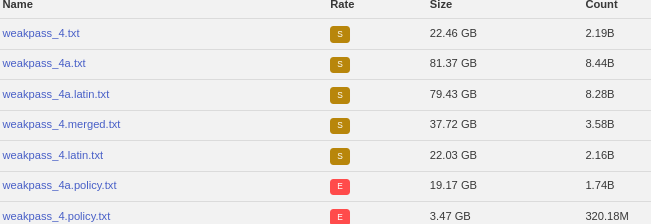
The dump was flagged by Kaduu during dark-web scanning and threat intelligence analysis. The leak echoes previous mega-complements such as the “RockYou2024” list which contained nearly 10 billion plaintext passwords. (Cybernews)
What makes this particular leak notable is that it’s being freely exposed without pay-walls or marketplace listings—raising the bar for malicious actors to exploit credential-stuffing, brute force attacks, and account takeovers.
Why This Password Compilation Is Critical
With 10 billion passwords now publicly available, the scale of potential damage skyrockets. Organisations that rely solely on password-only authentication or allow reused passwords are at extreme risk. According to researchers:
- These compilations often include reused credentials across many services. (World Economic Forum)
- Credential-stuffing attacks become easier and more automated when massive word-lists are available. (Security Magazine)
- Even personal users who believe they’re safe can be exposed if they reuse weak passwords across multiple sites.
The leak also signals a broader shift: these datasets are no longer hidden on pay-walled dark-web marketplaces but are opened freely, increasing exposure and accelerating attack-ramps. The secondary keyword password leak comes into stark relief here.
What Has Changed Compared to Previous Leaks?
Prior to this event, major leaks such as RockYou2021 (~8.4 billion passwords) and RockYou2024 (~9.9 billion) were still somewhat siloed. (IT Governance)
This new 10 billion passwords leak:
- Is freely available (no pay-wall).
- Posted publicly on a dark-web forum (HTDark).
- Incorporated by monitoring tools like Kaduu team’s detectors.
- Amplifies the long-tail risk from password reuse across services.
In short, the volume and accessibility of this dump significantly heighten the threat landscape.
Who Is Impacted & How Can Attackers Exploit the Leak?
Almost any user or organisation is impacted—especially those who reuse simple passwords, do not employ multi-factor authentication (MFA), or rely on shared credentials. Weak IAM (Identity and Access Management) practices amplify the risk, as attackers exploit gaps in authentication, provisioning, and access control. Attackers can:
- Use the leaked list to perform credential stuffing attacks across corporate and personal login portals.
- Attempt brute-force or dictionary attacks with the benefit of massive word-lists.
- Sell or trade the credentials further, or combine them with email address databases for phishing and social engineering.
“Companies should assume all passwords are compromised and build the correct mitigating controls,” noted security experts. (Security Magazine)
Practical Tip: Checklist to Protect Yourself & Your Organization ✅
Here’s a quick actionable checklist:
- ✅ Immediately reset all passwords if reuse is detected or suspected.
- ✅ Enable MFA (two-factor or stronger) on all critical accounts.
- ✅ Use a reputable password manager to generate unique, complex passwords.
- ✅ Monitor dark-web chatter for mentions of your organisation or domains.
- ✅ Educate users and enforce policy-changes about password-reuse and weak credentials.
- ✅ Audit your authentication systems for weak password-only access and move toward passwordless or passkey-based login where possible.
These steps can dramatically reduce the risk posed by large-scale dumps like the 10 billion passwords leak.
What Should Organisations Prioritise?
In addition to the checklist above, organisations should:
- Monitor and log sign-in attempts using large password-lists.
- Deploy behavioural analytics to identify unusual access or log-in patterns.
- Assume compromised credentials and enforce re-authentication of all users if feasible.
- Conduct risk assessments of third-party access, legacy systems, and shared credentials.
- Incorporate password-hygiene training as part of ongoing security awareness programmes.
Related Leaks & Contextual Background
This new password dump should be viewed in context of prior large-scale compilations. Some examples:
| Leak | Approximate Size | Notes |
| RockYou2021 | ~8.4 billion passwords | Earlier major compilation. (IT Governance) |
| RockYou2024 | ~9.9 billion passwords | Emerged July 4 2024. (Infosecurity Magazine) |
| Recent reports | >16 billion credentials from various sources. (CyberMindr) | |
| These compilations emphasize how credential-leaks are growing not just in size but in frequency and diversity of sources. |
Frequently Asked Question (FAQ)
Q: Does this leak mean my account is definitely compromised?
A: Not necessarily. Having your password appear in the leak increases the risk, especially if you reuse it across sites. The best answer is to assume exposure and act accordingly: change your password, enable MFA, and monitor for signs of unauthorized access.
Expert Insight
Cybersecurity researcher Neringa Macijauskaitė commented on broader password trends: “We’re facing a widespread epidemic of weak password reuse. Attackers harvest the latest credential dumps and execute highly effective credential-stuffing attacks.” (Cybernews)
This underscores the importance of viewing password-security as a foundational component of enterprise risk management.
Why You Must Act Now
The free exposure of 10 billion passwords is more than a data incident—it is a global threat amplifier. Every reused password, every account with weak authentication, is now an open target. Organisations and individuals alike must treat this as an urgent wake-up call. Whether you manage personal accounts or lead a corporate security team, the time to act is now.
🔒 Don’t wait for an alert or an attack; assume exposure and harden your defences immediately.
Conclusion
The 10 billion passwords leak represents one of the largest and most accessible credential dumps in cyber-history. Its existence on a public dark-web forum means millions of users and organisations are now at unprecedented risk of account-takeover, identity theft, and credential-stuffing attacks.
Fast, decisive action—resetting passwords, enabling MFA, upgrading authentication practices—is no longer optional—it’s crucial.
🔐 Discover much more in our complete guide at DarknetSearch
🚀 Request a demo NOW and see how cutting-edge threat intelligence can protect your digital identity.
Discover how CISOs, SOC teams, and risk leaders use our platform to detect leaks, monitor the dark web, and prevent account takeover.
🚀Explore use cases →